
Why does a small tree made from gemstone chips appear in a puja corner, a shop, a work desk or a newly opened home? The answer begins with the meaning of the tree: rootedness, growth, continuity, blessings and abundance. The colour and stone then add a second layer of symbolism. In contemporary Vastu and crystal practice, a citrine tree is often selected for prosperity, an amethyst tree for a peaceful spiritual space, and a rose quartz tree for harmony. Understanding those associations makes choosing a gemstone tree much more meaningful than choosing by colour alone.
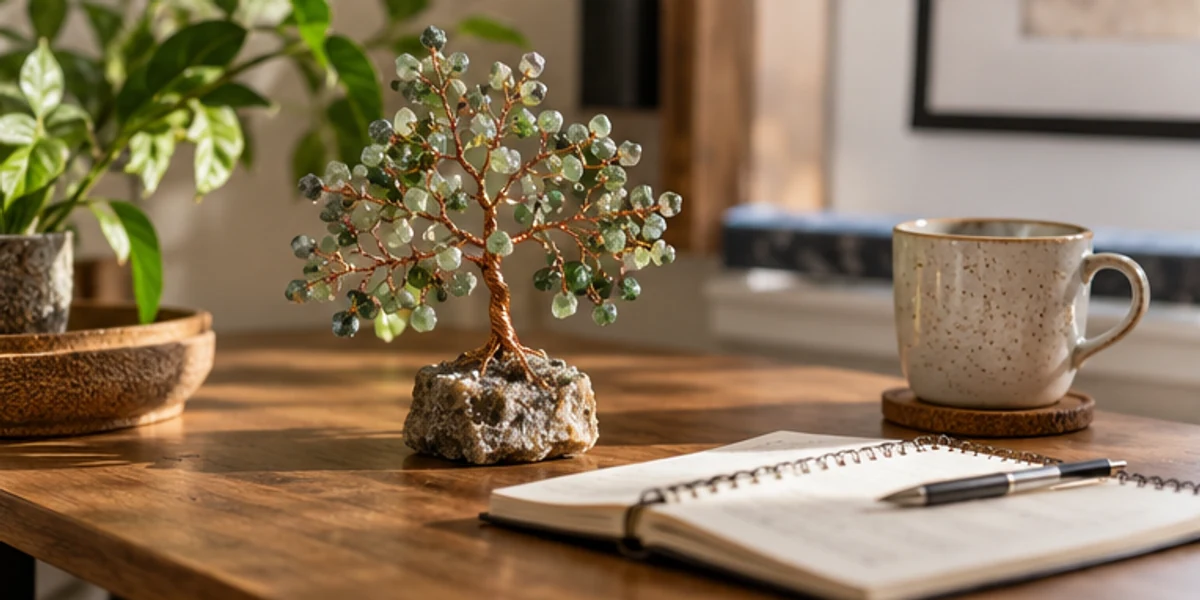
What does a gemstone tree symbolize?
A gemstone tree, also called a crystal tree or crystal money tree, is usually made from small mineral chips attached to shaped wire branches and fixed to a base. Its form is not accidental. Roots suggest stability and belonging; the trunk represents strength and direction; the branches show expansion and new opportunities; and the leaves or gemstone chips suggest abundance, relationships, knowledge or the fruits of effort. People choose different meanings according to the occasion and the stone.
Indian cultural traditions provide a rich background for tree symbolism. The Kalpavriksha, the wish-fulfilling tree of Indian mythology, is associated with abundance and the fulfilment of worthy desires. The Indian Museum, Kolkata, even catalogues an early sandstone representation of a Kalpavriksha from Besnagar (approximately second century BCE), with objects of prosperity represented among its branches. Sacred trees such as the banyan and peepal carry further associations of shelter, longevity, continuity and devotion in different traditions. A modern wire-and-stone gemstone tree is not the same object as a living sacred tree or a classical Vastu architectural prescription; it draws on the broader symbolism of growth and auspiciousness.
This distinction adds richness rather than taking anything away. When someone gifts a citrine tree for a new business, the tree shape offers a wish that the enterprise should take root and flourish. When a family keeps a rose quartz tree in a shared space, its meaning may be affection, reconciliation and the steady growth of relationships. When an amethyst tree is placed near a meditation seat, it becomes part of a setting associated with reflection and inner peace.
How gemstone trees fit into Vastu, Panchabhuta and energy traditions
Vastu Shastra interprets the relationship between a dwelling, its orientation, space, the Vastu Purusha Mandala and the five elements or Panchamahabhuta: Prithvi (earth), Jala (water), Agni (fire), Vayu (air) and Akasha (space). Traditional directional names include Ishanya (north-east), Agneya (south-east), Nairritya (south-west) and Vayavya (north-west). These terms provide the larger framework within which many modern Vastu advisers discuss colours, spaces and objects.
In contemporary Vastu-oriented crystal practice, stones and colours are chosen to reflect the quality a person wishes to cultivate in a particular area. A yellow or green tree may symbolize prosperity and development; a purple or transparent tree may be associated with reflection; a pink tree with warmth and family harmony; and a red-orange tree with initiative and vitality. The building's direction and purpose matter alongside the stone's symbolic meaning.
Gemstone trees are also common in Feng Shui as money trees and in modern chakra and crystal-healing traditions. These systems overlap in popular retail practice but have their own vocabulary. For example, the Feng Shui Bagua wealth area and the Vastu north/Kubera association are not automatically identical. A clear article should say which system it is using instead of treating every colour chart as one universal ancient rule.
Which gemstone tree represents what? A practical meaning guide
Start with the purpose rather than the photograph. The following are the widely encountered associations in modern Vastu-inspired and crystal practices. Their value for a customer is that they help translate a meaningful intention into a suitable stone and location.
| Gemstone tree | Traditional or contemporary association | Common reason for choosing it |
|---|---|---|
| Citrine | Prosperity, abundance, optimism, enterprise | Business opening, sales desk, professional goals |
| Green aventurine | Growth, opportunity, renewal, good fortune | New ventures, studies, personal development |
| Pyrite | Wealth symbolism, resolve, self-confidence | Office and trade-related prosperity arrangements |
| Tiger eye | Courage, focus, discernment, disciplined action | Decision-making and professional confidence |
| Amethyst | Tranquillity, contemplation, spiritual awareness | Prayer, meditation and quiet reflection |
| Clear quartz | Clarity, purity, amplification of intention | Puja corners, study spaces, general-purpose symbolism |
| Rose quartz | Affection, compassion, harmony, reconciliation | Family, relationship and housewarming gifts |
| Carnelian / sunstone | Energy, motivation, creativity and action | New projects, activity-oriented workspaces |
| Red jasper | Steadiness, endurance, grounding | Patience, consistency and purposeful effort |
| Black tourmaline / obsidian | Protection symbolism, boundaries, grounding | Entrance and personal-space arrangements |
| Seven Chakra tree | Seven energy centres and their colour sequence | Yoga, meditation, chakra-oriented practice |
The material and the colour are not the same thing. A yellow glass-chip tree is not automatically a citrine tree; green colour does not establish that a tree contains jade or emerald. Pyrite is a metallic mineral rather than a variety of quartz. A Seven Chakra tree should state which actual stones form its seven colours. If a design is sold as a Navagraha tree, its nine stones and planetary correspondences should be individually identified rather than inferred from a rainbow palette.
Gemstone tree colours and Vastu directions
In a Vastu-led choice, ask two questions: What does this zone traditionally represent? and What is the intention behind the tree? Many present-day practitioners combine traditional directional symbolism with more recent gemstone associations. Here is a useful starting map, not a compulsory shopping list for every floor plan.
| Direction / zone | Vastu association | Tree often considered today |
|---|---|---|
| North — Uttara | Kubera, prosperity, opportunities and resources | Citrine, green aventurine or pyrite tree for abundance |
| North-east — Ishanya | Spiritual orientation, prayer, knowledge; Jala association in many schemes | Amethyst or clear quartz near a neat puja / meditation corner |
| East — Purva | Sunrise, beginnings, learning and vitality | Green aventurine or a multicolour tree for growth and fresh starts |
| South-east — Agneya | Agni, transformation, action and activity | Carnelian or sunstone; some modern systems use citrine here |
| South-west — Nairritya | Earth, stability, rootedness and family structure | Rose quartz for harmony or an earthy-toned tree for steadiness |
| North-west — Vayavya | Vayu, movement, exchange and relationships | A lighter-toned tree chosen for communication or adaptability |
Notice the logic: north is linked to Kubera and prosperity, so citrine or green aventurine is commonly chosen for business intentions. North-east is associated with Ishanya and spiritual practice, so an amethyst or clear quartz tree may accompany a prayer or meditation space. South-west symbolizes stability and is often used for family-oriented intentions, with rose quartz entering through contemporary relationship-focused crystal traditions. Those examples join a traditional directional idea with a modern object; they should not be mistaken for a line-by-line ancient instruction prescribing a particular wire tree.
For precise placement, decide whether you are working from the entire property's plan or a single room, locate north consistently, and consider the actual use of the space. Our gemstone tree placement guide covers room-by-room decisions in more detail.
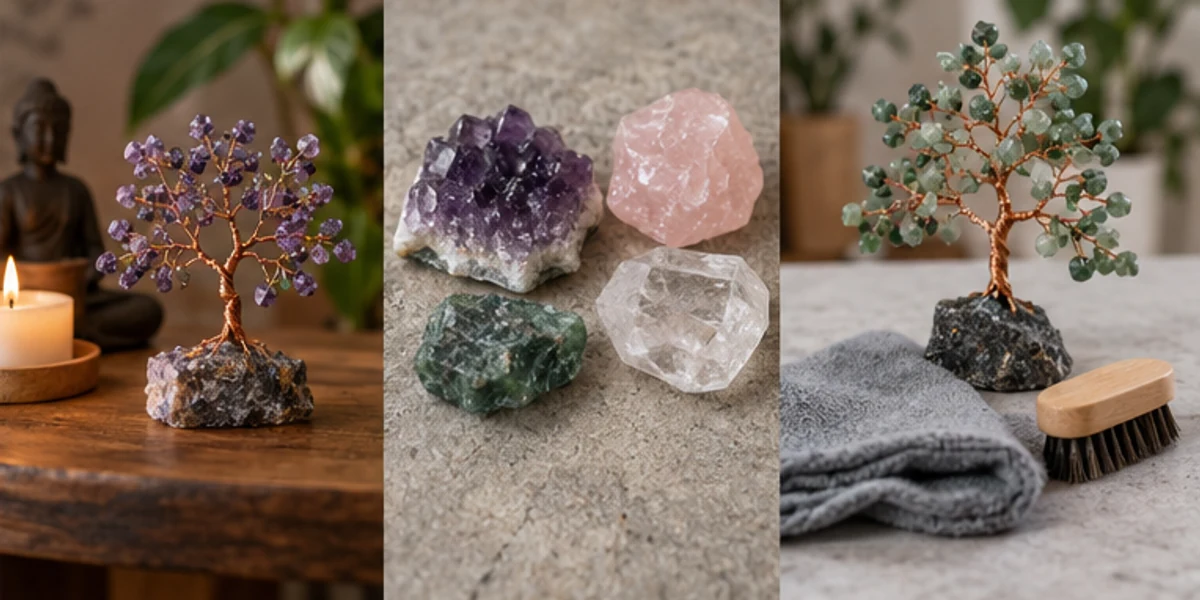
Three real-world style examples: choosing by intention
Example 1: A new shop wants a prosperity-focused arrangement
Imagine a small Bengaluru boutique opening its doors for the first time. The owner wants a meaningful object near the accounts desk. The intention is not merely “yellow looks nice”; it is steady trade, sound decisions and an expanding customer base. A citrine tree is a natural candidate because modern crystal practice associates citrine with abundance and commercial optimism. A green aventurine tree is an alternative when the emphasis is growth and opportunity; a pyrite tree may appeal to someone who prefers stronger metallic wealth symbolism.
If a simple floor plan places the desk in the northern zone, the owner can connect the tree with the Vastu tradition of Uttara and Kubera. If the north side is a doorway or too crowded, a nearby stable working surface may be more sensible than blocking movement to follow a generic picture. The owner could set a brief sankalpa (intention) for diligent work and prosperity when installing the tree. The practice becomes coherent: intention, appropriate stone, suitable space and daily attention.
Example 2: A family wants a calm place for prayer and reflection
Consider a home with a small prayer corner toward Ishanya, the north-east. An amethyst tree might be chosen for its associations with serenity and reflection; clear quartz for clarity and a clean visual presence. Either could stand beside spiritual books or in a nearby peaceful area without crowding the actual deity images or ritual arrangements. A family following a specific puja tradition should let that tradition guide what belongs on the altar itself.
Here the tree's purpose is not the same as the boutique's wealth-oriented tree. Its colour, meaning, setting and use have changed, even though both objects share the same branching form. A simple weekly practice could be to dust the tree, tidy the corner and sit quietly for a few minutes of japa or meditation.
Example 3: A housewarming gift for a couple
For a couple moving into a new home, a rose quartz tree can represent affection, mutual respect and harmony. In many contemporary Vastu and Feng Shui-influenced guides, pink stones are discussed for relationship-oriented areas, including the south-west. The giver might instead choose a Seven Chakra tree if the recipients practise yoga or meditation, or green aventurine if they are beginning a shared business. A note explaining the meaning of the chosen tree makes the gift personal and memorable.
Does a gemstone tree need a Kundali or Navagraha calculation?
Not every gemstone tree requires a birth-chart reading. A small crystal tree chosen for a room, a gift or a meditation practice is different from the Jyotish process of recommending a planetary gemstone for a person to wear. In Vedic gemstone astrology, an adviser may review Lagna, Rashi, the relevant Graha, house lordships, strength and Dasha before discussing a ring or pendant. A table-top gemstone tree is generally selected through symbolism, Vastu placement and personal practice rather than automatically functioning as a substitute for a Jyotish-prescribed gemstone.
The two approaches can still connect. Someone drawn to a Jupiter-related yellow gemstone theme may also appreciate a yellow prosperity tree, but the exact stone and its astrological role need separate assessment. Similarly, a Seven Chakra tree expresses the chakra colour system, whereas a Navagraha arrangement refers to nine planetary associations. Their names should not be interchanged merely because both are multicoloured.
How to choose the right gemstone tree
- Name the main purpose. Is this for prosperity, learning, inner peace, relationships, confidence, a spiritual practice or an auspicious gift? Choosing one primary intention makes the next decisions easier.
- Choose the symbolic stone. Compare citrine with green aventurine for growth, amethyst with clear quartz for a quiet corner, or rose quartz with Seven Chakra for a personal gift. Different stones communicate different intentions.
- Locate the intended space. For a Vastu-based placement, identify the relevant direction and its existing use. A small working desk, family shelf and puja corner should not all be treated as the same type of space.
- Read the actual material description. Ask whether the chips are natural, dyed, treated, glass or another material. Check the stone types, especially for mixed-colour trees.
- Judge the complete construction. Look at the branch spread, trunk strength, base, size and balance. A larger number of chips does not by itself make a tree more suitable for an intention.
- Make the practice your own. Place the tree deliberately, keep its surroundings cared for, and use a short prayer, affirmation or sankalpa if that is part of your tradition.
Using a gemstone tree respectfully in a home or workplace
A gemstone tree can be installed on an auspicious occasion such as a housewarming, office opening or festival, or simply when setting up a new space. Some owners offer a prayer, light a nearby diya safely, or chant a familiar mantra as part of their personal worship. Others choose a quiet moment to express an intention for growth, harmony or disciplined work. There is no need to give every tree the same ritual, because devotional customs and modern crystal practices differ.
Keep the assembled tree on a stable, raised surface where it can be seen and cared for. Dust the chips and branches gently with a soft brush; lift the object from its base rather than from the gemstone crown. Avoid soaking the entire assembly, as adhesives, wire finishes and stones do not always respond the same way to water, salt or strong sunlight. Proper care helps the tree remain a fitting part of the home or workplace for years.
Common mistakes when interpreting gemstone-tree meanings
- Choosing by colour alone: similar-looking chips may be different minerals, with different traditional associations and material qualities.
- Mixing systems without explanation: the Feng Shui Bagua, Vastu directions, chakra colours and planetary gemstone recommendations answer different questions.
- Ignoring the space: a prosperity tree at a crowded entrance may be less appropriate than one on a stable nearby shelf.
- Confusing a symbolic tree with a living plant: the wire tree represents growth but is not a substitute for greenery, ventilation or thoughtful room planning.
- Assuming more chips mean more power: chip counts generally describe physical fullness and design, not a universal spiritual ranking.
- Overlooking the person receiving it: a thoughtfully chosen gift aligns with the recipient's beliefs, interests and actual space.
Frequently asked questions
Which gemstone tree is commonly chosen for money and business?
Citrine, green aventurine and pyrite are frequent choices in contemporary Vastu-inspired prosperity arrangements. Citrine is linked with abundance and optimism, aventurine with opportunity and growth, and pyrite with wealth symbolism and resolve. North, associated with Kubera, is a common directional starting point.
Which gemstone tree is suitable for peace and meditation?
Amethyst and clear quartz are often preferred for a quiet corner, puja room or meditation space. Their associations emphasize calm, reflection and clarity. In a Vastu framework, the north-east or Ishanya zone is commonly discussed for spiritual practice.
What does a rose quartz gemstone tree mean?
A rose quartz tree is associated with affection, compassion, emotional harmony and relationships. It is frequently chosen for a family space, wedding gift or housewarming. Relationship-focused south-west placement is especially common in modern crystal and Feng Shui-influenced practice.
Are Seven Chakra and Navagraha gemstone trees the same?
No. A Seven Chakra tree refers to the seven chakra colour sequence used in modern energy practices. A Navagraha design refers to the nine planetary principles of Jyotish and requires an identified set of stones or colours. Check the actual chips in the product rather than assuming the two descriptions are interchangeable.
Can I keep a gemstone tree in my office?
Yes. A compact citrine, aventurine, pyrite or tiger eye design may be selected according to the purpose of the workspace. Position it where it is visible but does not interfere with equipment, customers, paperwork or a working surface.
Does every family need the same stone or the same direction?
No. The intended purpose, Vastu zone, family tradition and available space shape the selection. A prayer corner, shop counter and couple's bedroom may call for very different choices even within the same home.
How is a gemstone tree different from wearing a gemstone?
A gemstone tree is an object for a space, gift or spiritual arrangement. Wearing a planetary gemstone in Jyotish is a personal selection traditionally considered in relation to a birth chart. A tree need not be treated as an astrological substitute for a ring, pendant or other prescribed item.
