A PRACTICAL GUIDE
About malas and rosaries
A mala is a string of beads used in many religious and personal practices. Depending on the tradition and the design, it may be used to count mantra repetitions, carried for prayer, or worn as devotional jewellery. “Japa mala” usually describes a mala used for recitation; “kantha” is often used for a necklace-style strand. Names and customs vary, so use the product’s stated bead count, materials, measurements and intended use when comparing pieces.
Spiritual meanings attached to a material or bead are part of cultural and devotional traditions. They are not medical, psychological or financial guarantees.
Choose for Japa, wearing, or both
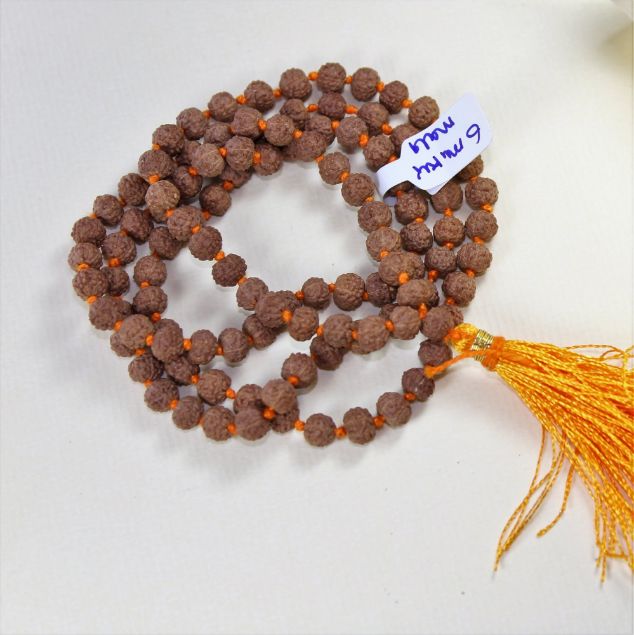
For Japa, consider whether the beads are comfortable to handle repeatedly, whether the stated count suits your practice, and whether the design includes a guru or marker bead. For wearing, check the finished length, bead diameter, weight, thread or wire, knots, spacers and any metal caps. A long 108-bead mala may feel different to wear from a short 27-bead strand.
Some designs can serve both purposes, but this depends on their construction and your own practice. Check the individual product details rather than assuming every necklace is intended for chanting or every Japa mala is suitable for daily wear. In many traditions, practitioners move one bead at a time while reciting a mantra and pause at the marker bead; follow the custom of the tradition you practise.
What do 27+1, 54+1 and 108+1 mean?
These are common mala formats, not a rule that every design must follow. A shorter count can be easier to carry or handle; 108 beads are commonly used for a full round of recitation in many practices. The extra “+1” often identifies a guru, Meru or marker bead. Whether it is counted, and how the mala is used, depends on the tradition followed by the practitioner.
Product listings may state the count differently, so check whether the marker bead is included in the number, along with the bead size and finished length. See our more detailed guide to 27, 54 and 108 bead counts.
Mala types and materials
This collection includes several kinds of bead and construction. Availability changes, so use the current product listing to confirm what each item contains.
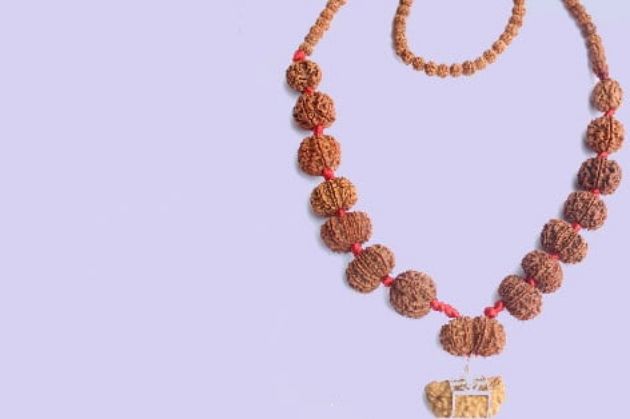
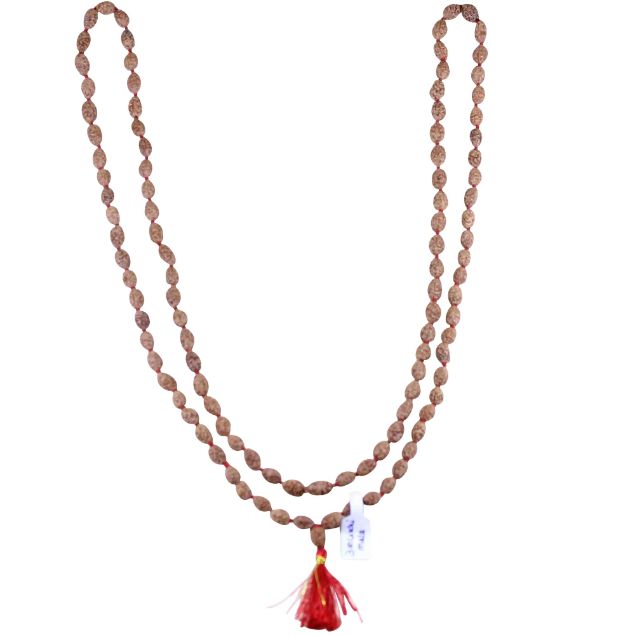
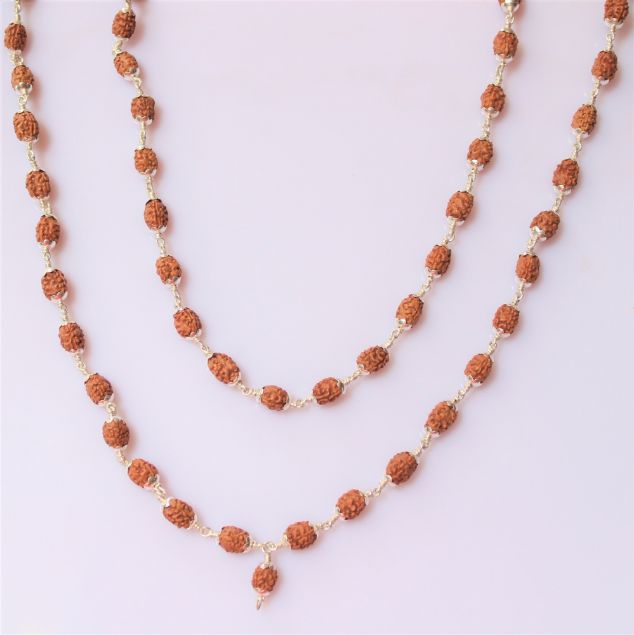
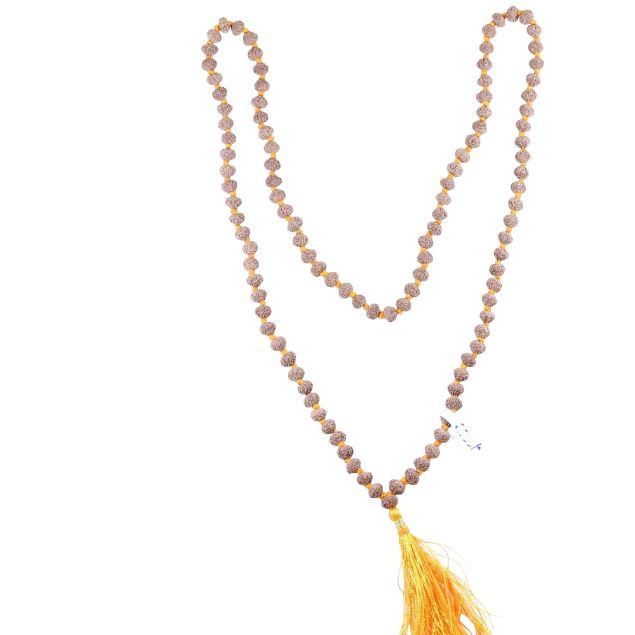
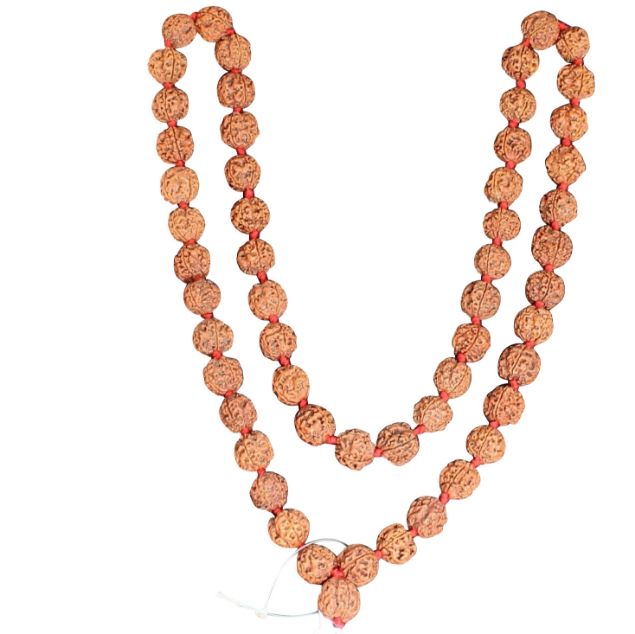
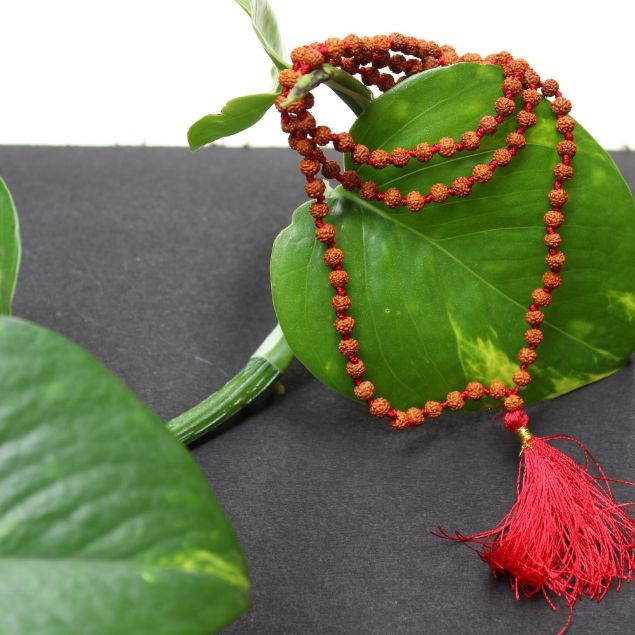
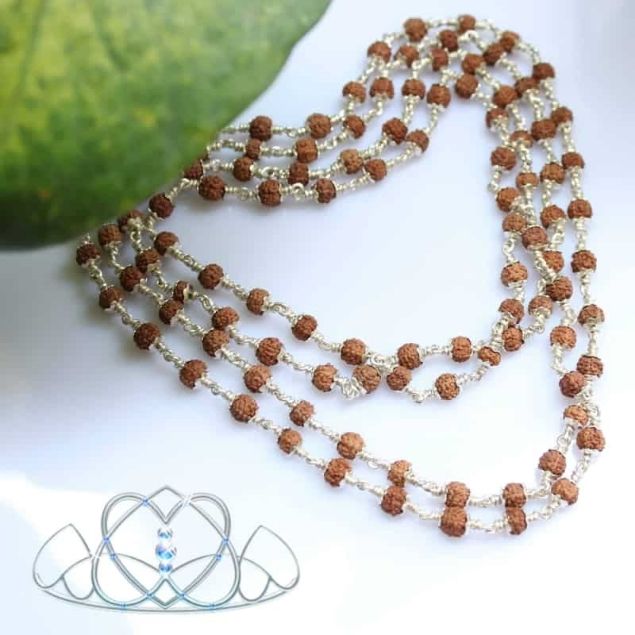
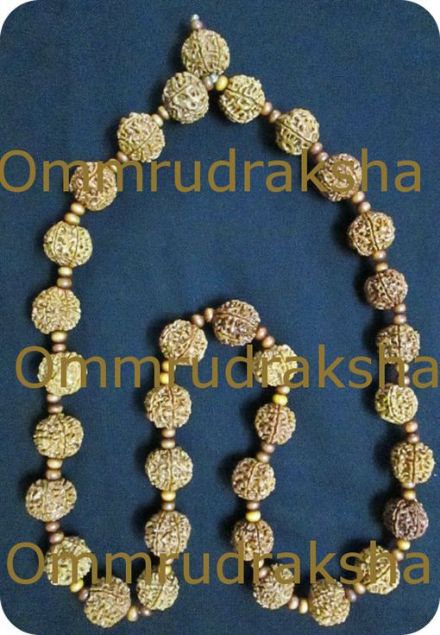
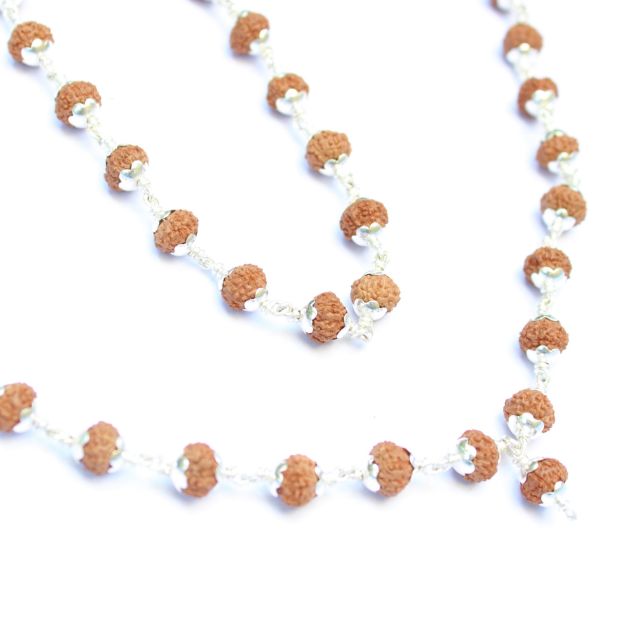
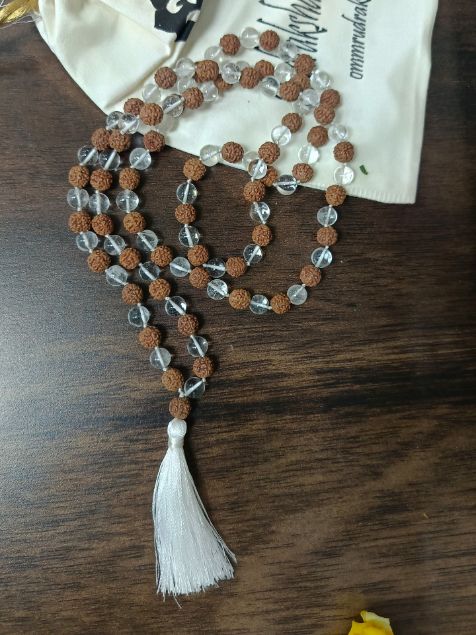
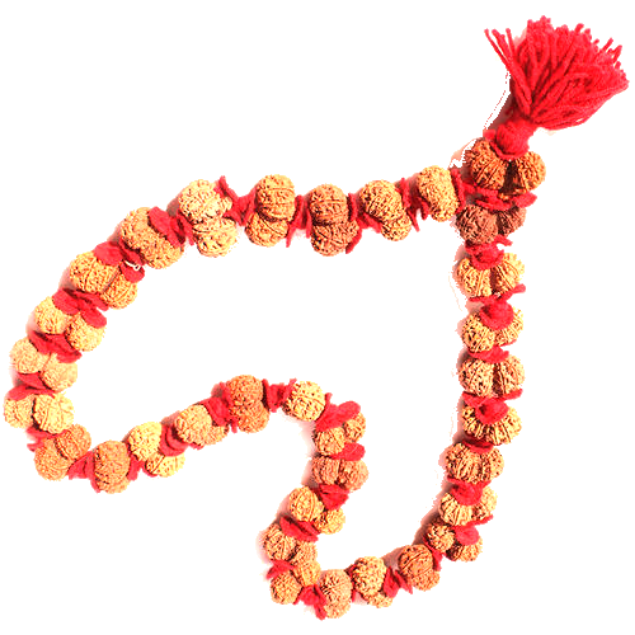
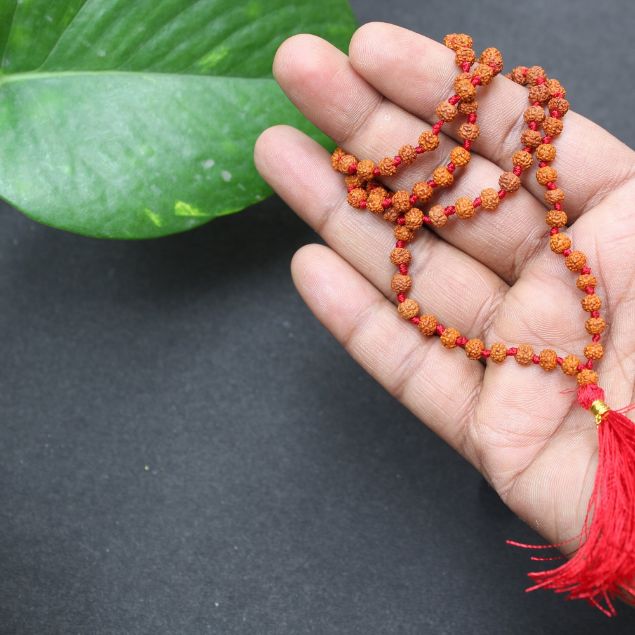
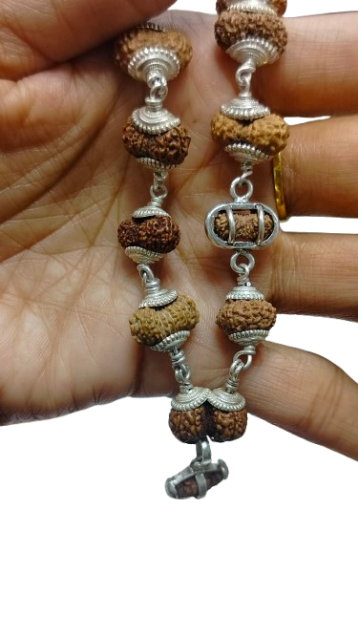
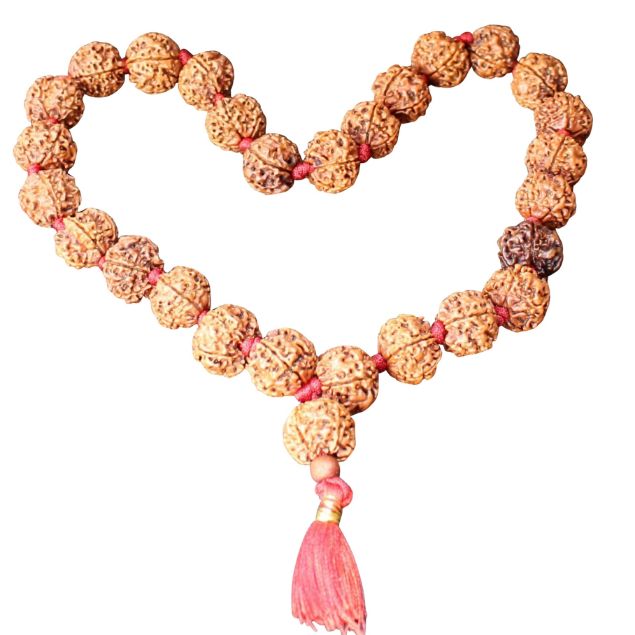
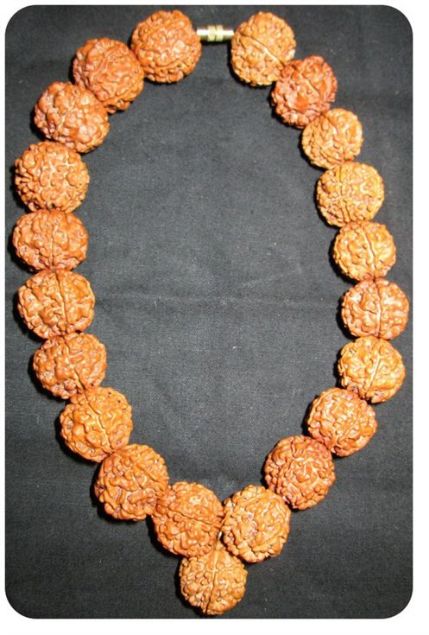
- Rudraksha: Check the stated mukhi count, origin, bead dimensions, total count and any item-specific documentation.
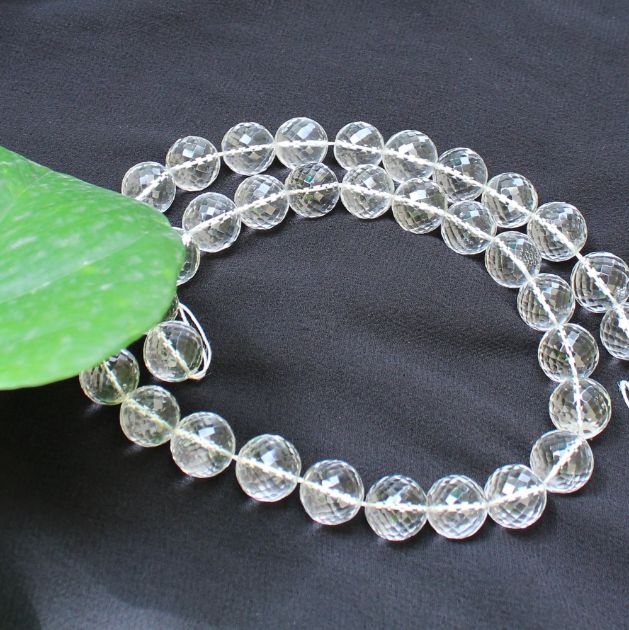
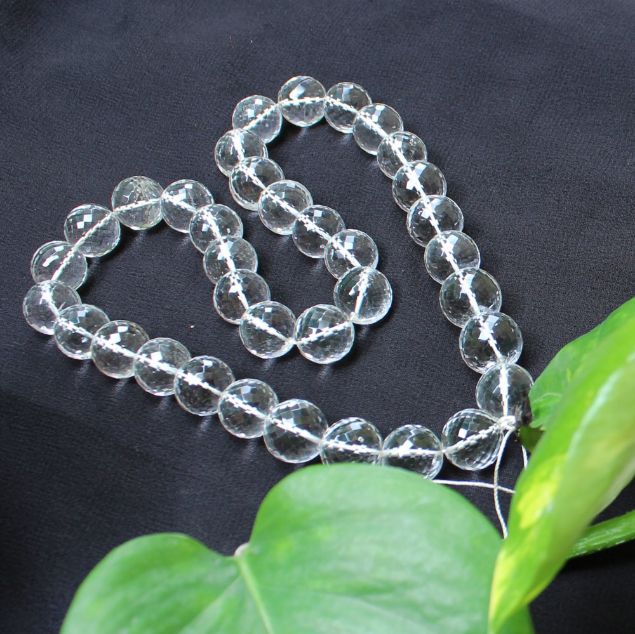
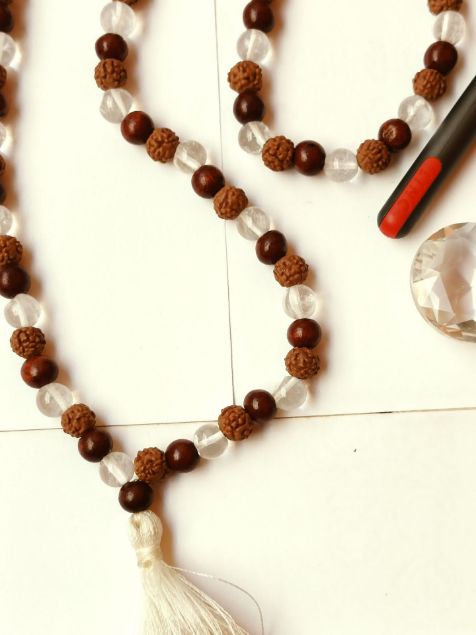
- Sphatik (clear quartz): Check the product’s material description, bead size, cut and finish.
- Tulsi: Tulsi-bead malas have a place in devotional traditions. Check that the specific product listing identifies Tulsi as the bead material and is currently available.
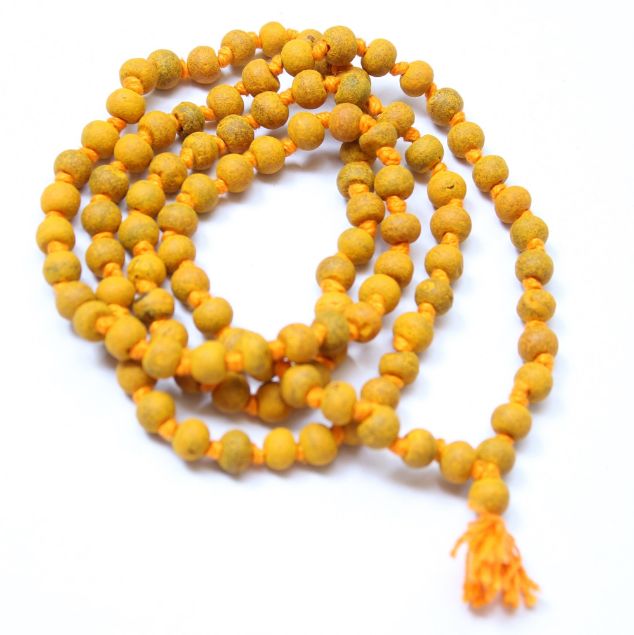
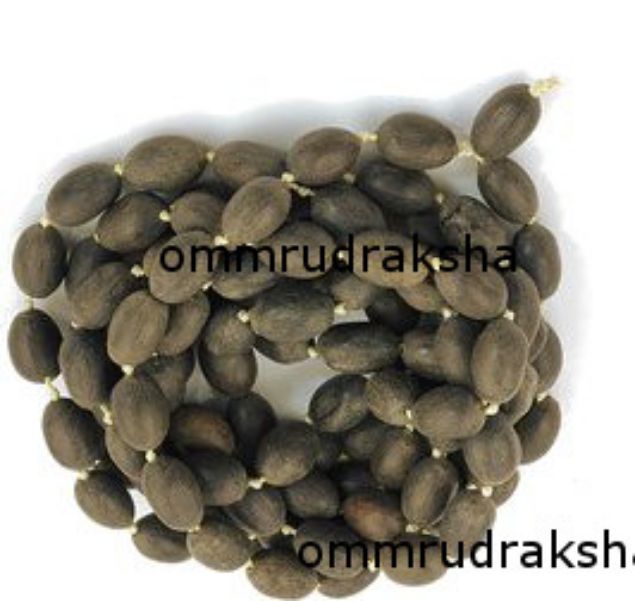
- Haldi and other devotional beads: Confirm the material and intended use stated on the product page.
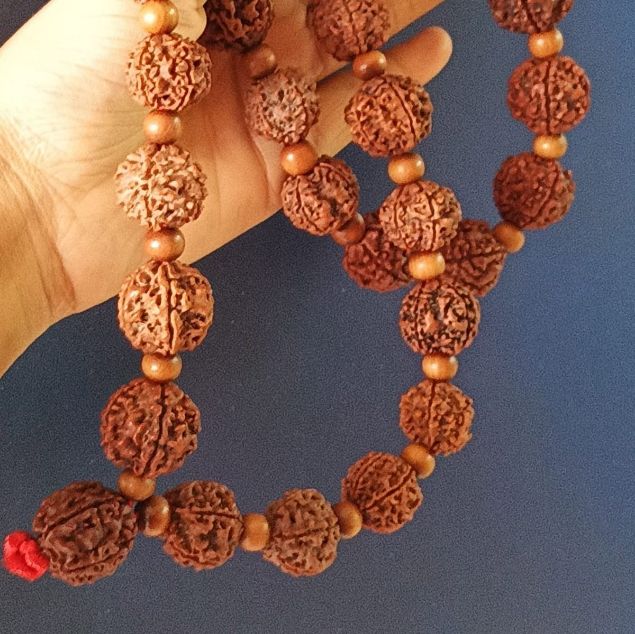
- Mixed-bead designs: Read the bead-by-bead composition and count; similar-looking strands can use different combinations.
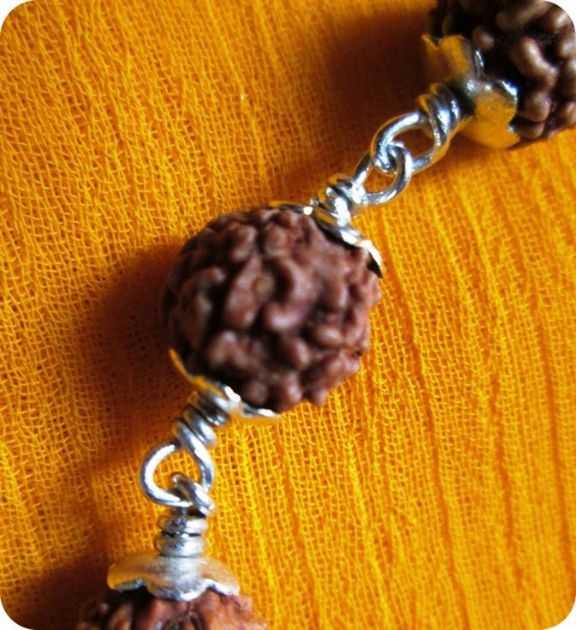
- Silver or other metal details: “Silver mala” can refer to caps, wire or other parts of a design. Check the listed metal, purity and construction rather than assuming the beads themselves are silver.
- Sandalwood: It may be a bead material or a spacer in a mixed design. Confirm which applies to the specific product.
How to choose a mala
Every product includes a DGTL Gem Lab certificate. Read the report to understand which materials or components it covers.
- Decide how you will use it. Japa, wearing and occasional devotional use can call for different lengths and bead sizes.
- Compare the specifications. Check material, count, dimensions, finished length, stringing, spacers and metal components.
- Choose a comfortable size. Smaller beads make a longer count more compact; larger beads make a heavier, more prominent strand.
- Read the listing and photos carefully. Confirm what is included, whether the pictured piece is the item supplied, and what documentation applies to it.
- Ask before ordering if a detail is unclear. Share the product link and ask about the exact material, length, count or certificate you need to verify.
What affects mala prices?
Prices vary by the material and quality of the beads, bead size and count, design, stringing, spacers, metalwork and craftsmanship. Personalised or rare pieces may be priced differently, and precious-metal components can affect the final cost. There is no single price that applies to all malas.
Compare products with similar materials and specifications, and use the live product page for current price and availability. If a listing says “call for pricing,” contact the store for that item rather than estimating from another design.
Care and traditional use
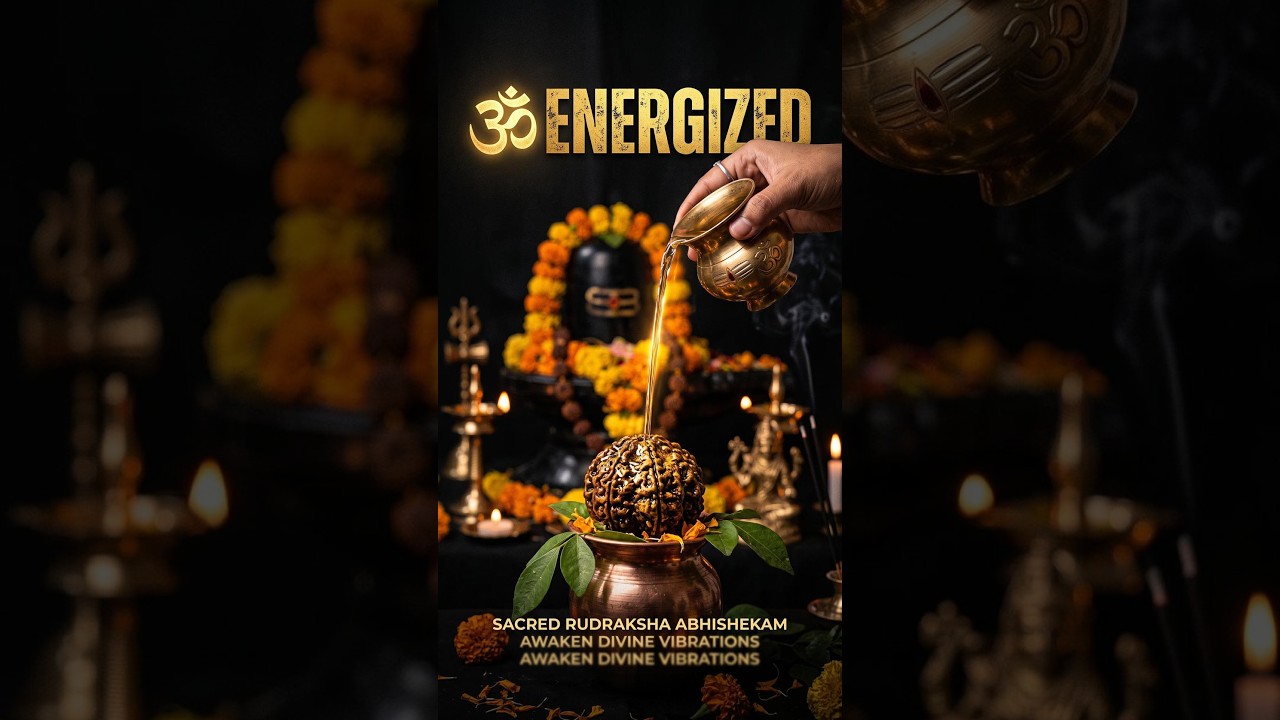
Basic energization is included with every order. Special temple services are available on request.
Care depends on the beads and how the mala is made. Keep it away from avoidable pulling, harsh cleaners and prolonged contact with perfume or lotions. If it gets wet, dry it gently before storing; do not use heat to speed drying. Follow the care advice supplied for the specific bead and any silver, thread or other setting.
Consecration and Japa customs differ across traditions. If energization is part of your practice, follow guidance you trust; it is a devotional practice, not a measurable product-performance claim. Our existing Rudraksha energization guide describes one approach for Rudraksha.
Explore the mala range
Browse the current subcategories to compare the products available in each collection.
Mala and rosary FAQs
Should I choose 27, 54 or 108 beads?
Choose the count that suits your practice, handling preference and desired length. These are common formats, not universal requirements. Check whether the listing includes a separate marker bead in its count.
What is the extra “+1” bead?
It commonly refers to a guru, Meru or marker bead. Its name and use vary across traditions; some practitioners do not count it during a round of Japa.
Can I wear the same mala that I use for Japa?
Some people do and others keep separate malas. Consider the construction, cleanliness and customs of your practice, and check whether the product is comfortable and suitable for both uses.
Is one mala material better than another?
There is no single best material for every person or practice. Choose based on your tradition, intended use, comfort, construction and the specifications of the individual product.
How do I know what material a mala is made from?
Check the exact product description, photographs and any supporting documentation. For mixed malas, confirm the materials and counts of each bead type; ask the store if the listing is unclear.
Does every mala need to be consecrated?
No single practice applies to everyone. Consecration is a matter of personal tradition and preference. Follow guidance from the tradition or teacher you trust.
How should I clean a mala?
Use care suited to its materials. Avoid harsh chemicals and heat, dry it gently if it gets wet, and follow any item-specific care instructions for the beads, thread and metal parts.
Malas and rosaries for japa or wearing
A mala can serve as a counting tool for japa, a worn devotional item or both. The available collections include Rudraksha and Sphatik. Read the actual composition, bead-count convention, bead size, finished length and stringing. A combination mala may contain a selected set rather than a full 108-bead rosary.
Documentation and included service
Every product includes a DGTL Gem Lab certificate and basic energization is included with every order. Read the document for its actual scope. Special reports, geographic-origin testing and temple services are arranged separately on request; confirm scope, cost and timing before purchase.
Useful buying guides
Check the live product page for the current offer, then review shipping information and return terms. For a free recommendation, call +91 97389 07165. See the Bengaluru showroom details before travelling.