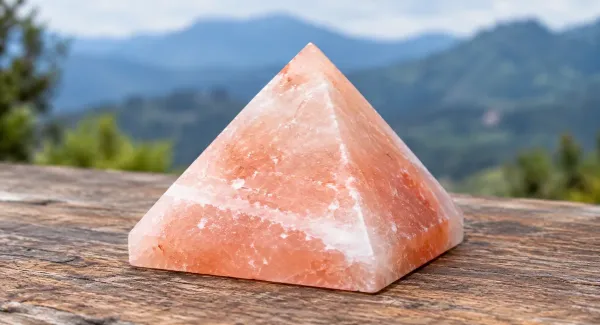
This rock salt pyramid is designed as one shaped rock salt pyramid. Its value as a decorative offer lies in the material’s own pattern, the carved geometry and a stable finished base.
Appearance and physical form
Pink, cream and white variation gives the salt form a granular, softly translucent appearance. A carved rock-salt body differs from clear quartz and also from a pressed salt-and-binder object. The construction should be explicit because it affects both expectations and the way the pyramid is handled.
Material and construction questions
Ask whether the object is carved, pressed, bound or coated. Inspect loose grains, base stability and point damage. Decorative material is not automatically edible or food-grade, and pink colour does not verify a particular mine or geographic origin.
| Specification | Buying information |
|---|
| Design | Rock Salt Pyramid |
| Physical form | one shaped rock salt pyramid |
| Material | Rock Salt |
| Dimensions and weight | Provided for the selected piece before purchase |
| Colour and pattern | Natural or finish-related variation; refer to the actual piece |
| Treatment and origin | Refer to the disclosure for the selected piece |
Care and handling
Keep it dry and off vulnerable furniture without protection. Avoid rinsing, soaking and steam. Check for moisture and salt residue underneath, especially during humid weather.
Traditional significance
Salt has symbolic cleansing associations in household traditions; no indoor-air or respiratory benefit is asserted.
Product questions
Is a damp underside evidence of cleansing energy? Assess humidity first. Can the ornament be eaten? It is a decorative offer. Can it share storage with metals? Isolate it from possible moisture and salt transfer.
Helpful reading