Rock Salt Pyramid
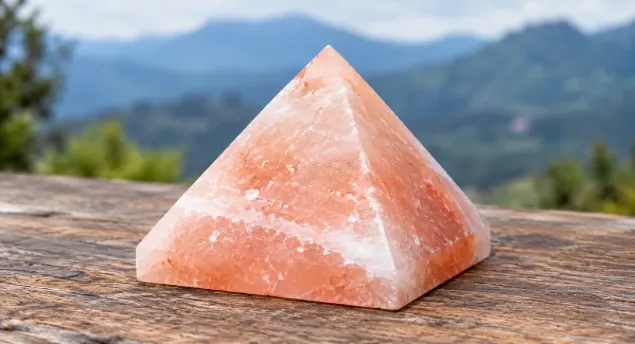
Pink, cream and white variation gives the salt form a granular, softly translucent appearance. One shaped rock salt pyramid.
Call for pricing
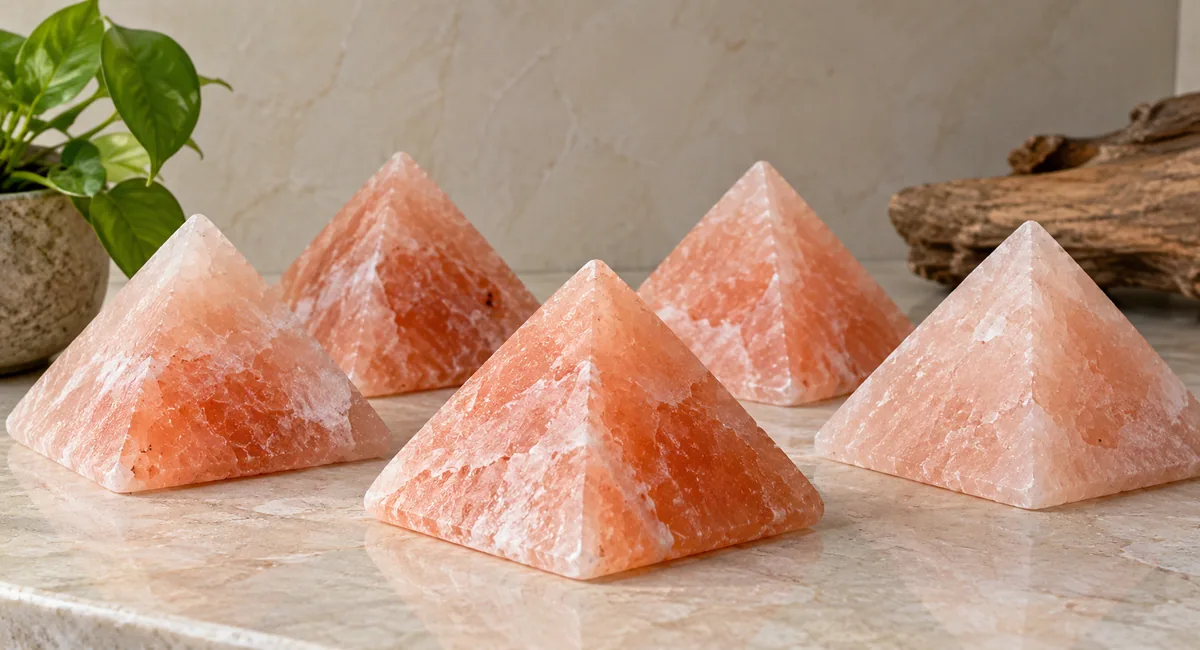
Rock salt pyramids are made from halite-rich material, commonly with pale pink, cream or white variation. The body may look granular rather than like polished quartz. Ask whether the object is carved from rock salt or formed from salt particles with a binder, because those are different constructions and may respond differently to handling.
Salt can dissolve in water and may collect moisture in humid conditions. A damp patch underneath should not be interpreted as evidence that the pyramid has removed negativity. Choose a dry display location, use a protective dish where appropriate and inspect the surface below it. A bathroom or a shelf next to a humidifier is an unsuitable default.
Use gentle dry dusting. Do not rinse, soak, place in salt water or use steam. Store dry and separately from metals or delicate surfaces that moisture and salt can damage. Wrap for impact protection without storing the object while damp. If the surface begins to dissolve or crumble, move it off vulnerable furniture and seek advice about storage conditions.
Is moisture proof of spiritual activity? No: humidity and salt behaviour offer a physical explanation. Is the carving edible? A decorative product is not automatically food-grade. Can it be placed on wood without protection? Use a suitable protective surface and check for dampness or salt residue.
Read the Rock Salt pyramid guide and Rock Salt vs Carved Stone Pyramids: A Humidity and Care Comparison.

