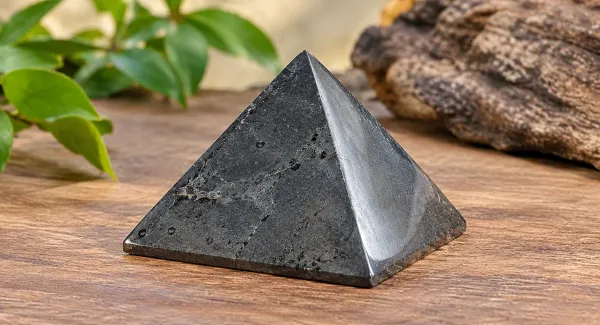
This hematite pyramid is designed as one carved pyramid. Its value as a decorative offer lies in the material’s own pattern, the carved geometry and a stable finished base.
Appearance and physical form
A steel-grey metallic-looking surface creates a compact, visually weighty display. The appeal differs from a transparent gemstone: reflections and surface finish become central. Because several manufactured materials resemble hematite, the identity of the actual body matters as much as the way the polished faces look.
Material and construction questions
Request an explicit natural-mineral or manufactured-material description. Strong magnetism is not proof of natural hematite, and a heavy feel does not settle the question either. Ask about coatings and fabrication before comparing a carving with a pressed or sintered imitation.
| Specification | Buying information |
|---|
| Design | Hematite Pyramid |
| Physical form | one carved pyramid |
| Material | Hematite |
| Dimensions and weight | Provided for the selected piece before purchase |
| Colour and pattern | Natural or finish-related variation; refer to the actual piece |
| Treatment and origin | Refer to the disclosure for the selected piece |
Care and handling
Support the full base over a clear surface. Use a dry soft cloth initially, avoid acids and soaking, and do not place a dense ornament where a fall could damage another object.
Traditional significance
Hematite is associated with grounding in current crystal traditions; no circulation, pain-relief or magnetic-treatment benefit is asserted.
Product questions
Does magnetic attraction certify hematite? No. Is a manufactured option necessarily unusable? It can be decorative when accurately named. Is metal-like shine proof of a metal body? No.
Helpful reading