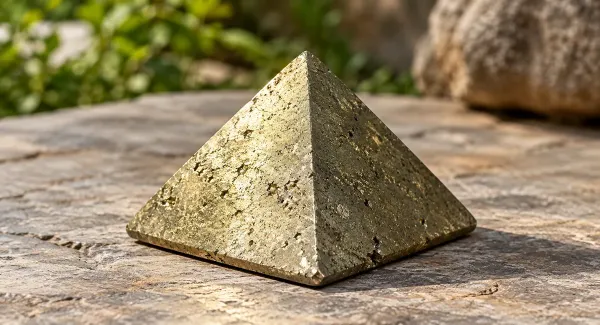
This pyrite pyramid is designed as one carved pyramid. Its value as a decorative offer lies in the material’s own pattern, the carved geometry and a stable finished base.
Appearance and physical form
A brassy metallic colour and fine granular surface give this form its character. Small pits may remain visible after carving, producing a more mineral-like texture than polished brass. The gold-like appearance is decorative and should not be confused with precious-metal content or a metal coating on another body.
Material and construction questions
Ask whether the body is carved pyrite-bearing material, reconstructed or coated. Review the underside, loose grains and any filling. Powdery deposits, active cracking or substantial deterioration need specialist attention rather than a routine claim that the surface is naturally rustic.
| Specification | Buying information |
|---|
| Design | Pyrite Pyramid |
| Physical form | one carved pyramid |
| Material | Pyrite |
| Dimensions and weight | Provided for the selected piece before purchase |
| Colour and pattern | Natural or finish-related variation; refer to the actual piece |
| Treatment and origin | Refer to the disclosure for the selected piece |
Care and handling
Choose dry display and gentle dry dusting. Keep away from damp planters, acids and salt water; isolate the object for advice if the surface begins to deteriorate.
Traditional significance
Abundance is a modern symbolic association with the gold-like colour, not a financial promise.
Product questions
Is pyrite gold? No. Must it be perfectly mirror-smooth? Natural texture can remain. Can it be soaked to improve shine? Dry care is preferable.
Helpful reading