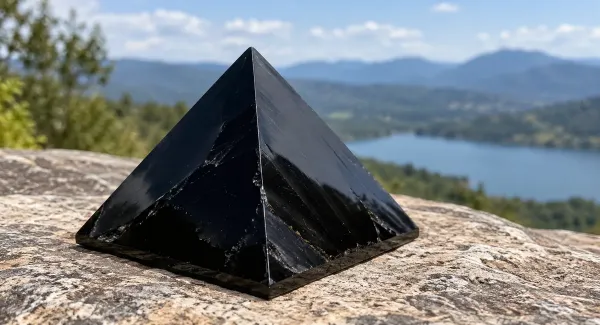
This black obsidian pyramid is designed as one carved pyramid. Its value as a decorative offer lies in the material’s own pattern, the carved geometry and a stable finished base.
Appearance and physical form
A reflective black body emphasises the simple geometry. Compared with mottled or snowflake varieties, the surface is visually quiet, with room reflections changing as the piece turns. The finish is attractive on a protected shelf where the apex has clearance and the base will not be regularly struck.
Material and construction questions
Ask for correct natural-volcanic-glass identification, since manufactured black glass can resemble it. Inspect small chips at the apex and base corners under raking light. Confirm whether the photograph shows the actual piece and whether any edge has been repaired or deliberately softened.
| Specification | Buying information |
|---|
| Design | Black Obsidian Pyramid |
| Physical form | one carved pyramid |
| Material | Black Obsidian |
| Dimensions and weight | Provided for the selected piece before purchase |
| Colour and pattern | Natural or finish-related variation; refer to the actual piece |
| Treatment and origin | Refer to the disclosure for the selected piece |
Care and handling
Avoid impacts, steam and thermal shock. Use a clean soft cloth with suitable mild moisture if needed; pack so the point cannot strike a hard box wall.
Traditional significance
Reflection and protection are contemporary associations, not a demonstrated shield or a substitute for practical safety.
Product questions
Is every glossy black pyramid obsidian? No. Can a chipped edge be sharp? Yes. Does a plain surface make the material less natural? No; pattern and origin are different questions.
Helpful reading