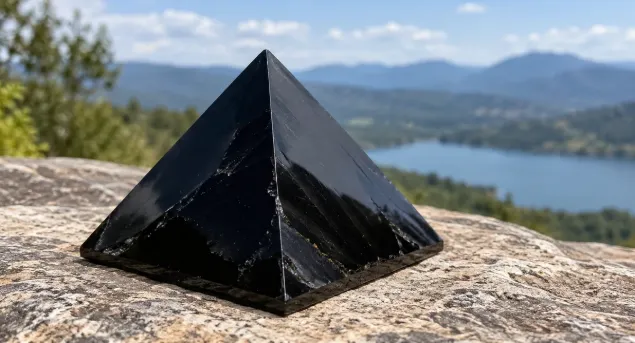
Black Obsidian Pyramid
A reflective black body emphasises the simple geometry. One carved pyramid.
Call for pricing
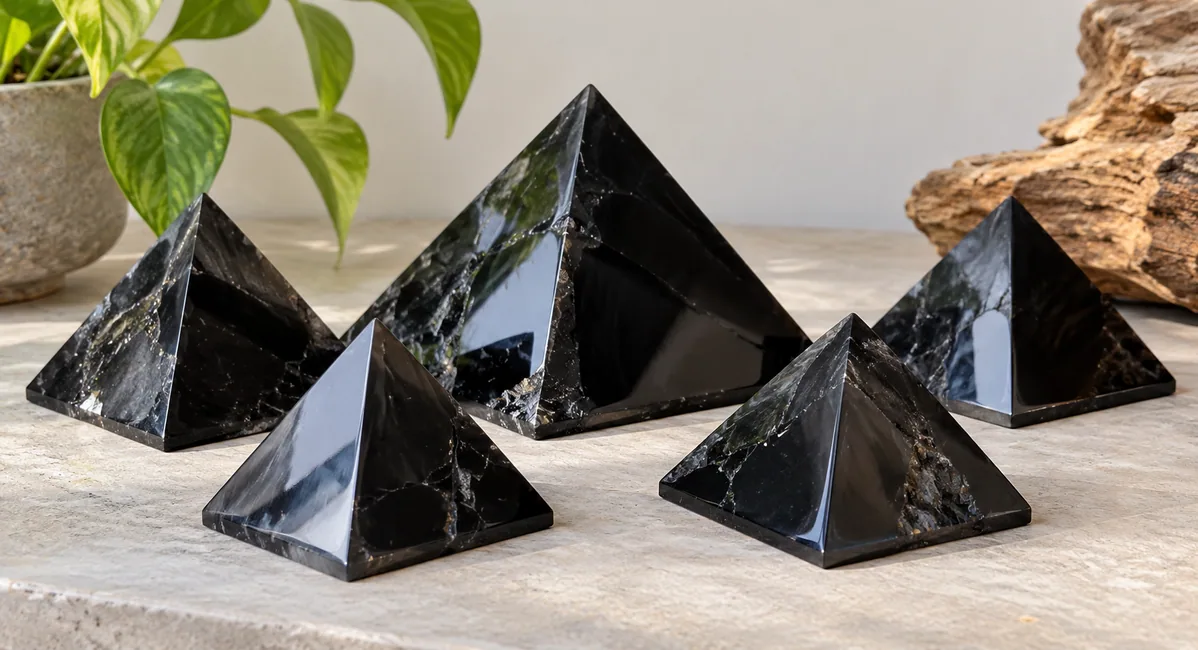
Black obsidian is naturally formed volcanic glass. A well-polished pyramid can show strong reflections while remaining visually quiet compared with patterned gemstone carvings. The word crystal is often used loosely in retail, but it does not mean obsidian has the same crystalline structure as quartz. Accurate material naming makes the comparison more useful.
Ask for a photograph with light skimming across the apex and base edges. Bright mirror-like reflections can conceal a small chip or surface scratch. Check the base for stability and any repair. A perfect black appearance does not establish natural origin, since manufactured glass can imitate a similar look.
Glasslike edges can chip and a fresh break can be sharp. Handle the pyramid over a soft surface, away from children’s play areas. Clean gently with a soft cloth and modest moisture if the finish permits; avoid steam, ultrasonic cleaners and thermal shock. Pack each piece separately and keep pressure off the apex.
Does a mirror finish prove obsidian? No. Is a plain surface less natural than patterned obsidian? No: varieties have different appearances. Can a chipped point be ignored because the object is natural? No: damage should be disclosed and sharp fragments need careful handling. Inspect condition before making symbolic comparisons.
Read the Black Obsidian pyramid guide and Black Pyramid Materials: Tourmaline, Obsidian and Shungite.

