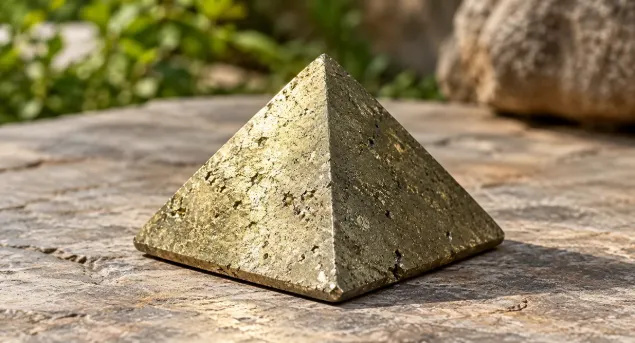
Pyrite Pyramid
A brassy metallic colour and fine granular surface give this form its character. One carved pyramid.
Call for pricing
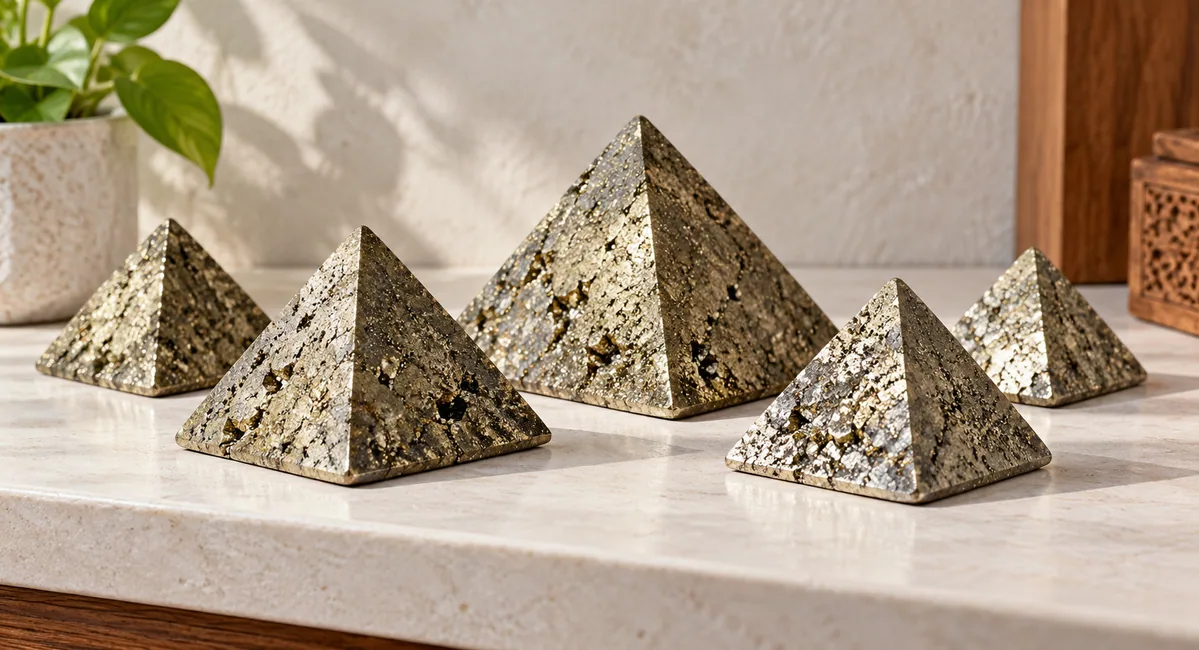
Pyrite is an iron sulphide mineral with a brassy metallic appearance. A carved pyramid may show fine grains, pits or small contrasting mineral areas instead of a perfectly mirror-flat gold surface. That texture can be part of the material, but a seller should distinguish a sound polished face from loose grains or active deterioration.
Gold colour does not make pyrite a precious metal, and a brass-coloured coating on another material is not the same offer. Ask whether the piece is one carved pyrite-bearing material, a reconstructed product or a coated imitation. If the carving contains other minerals, the description should say so rather than presenting a mixed rock as pure pyrite.
Keep pyrite out of water, damp planters and humid bathroom displays. Use gentle dry dusting and avoid acids, salt solutions and abrasive polishing. Store separately in a dry environment and check periodically for change. If powder or deterioration appears, isolate the object from other stored items and ask a mineral specialist for advice.
Must a pyrite pyramid be perfectly smooth? Natural material can have texture, but loose areas deserve disclosure. Can it be soaked to remove tarnish? Dry care is preferable. Is gold colour an authenticity test? No. Ask for construction details and condition rather than using colour as proof.
Read the Pyrite pyramid guide and How to Clean, Handle, Store and Pack Gemstone and Metal Pyramids.

