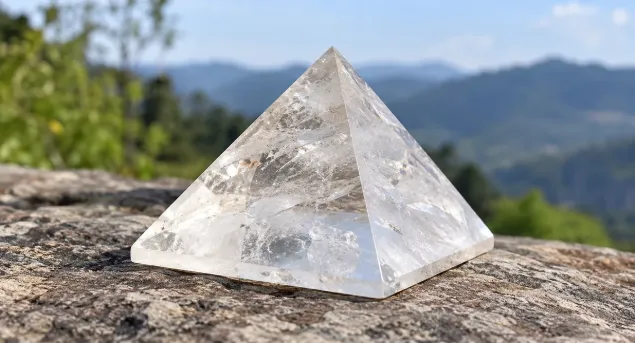
Clear Quartz Pyramid
The transparent body allows internal veils and reflected edges to become part of the display. One carved pyramid.
Call for pricing
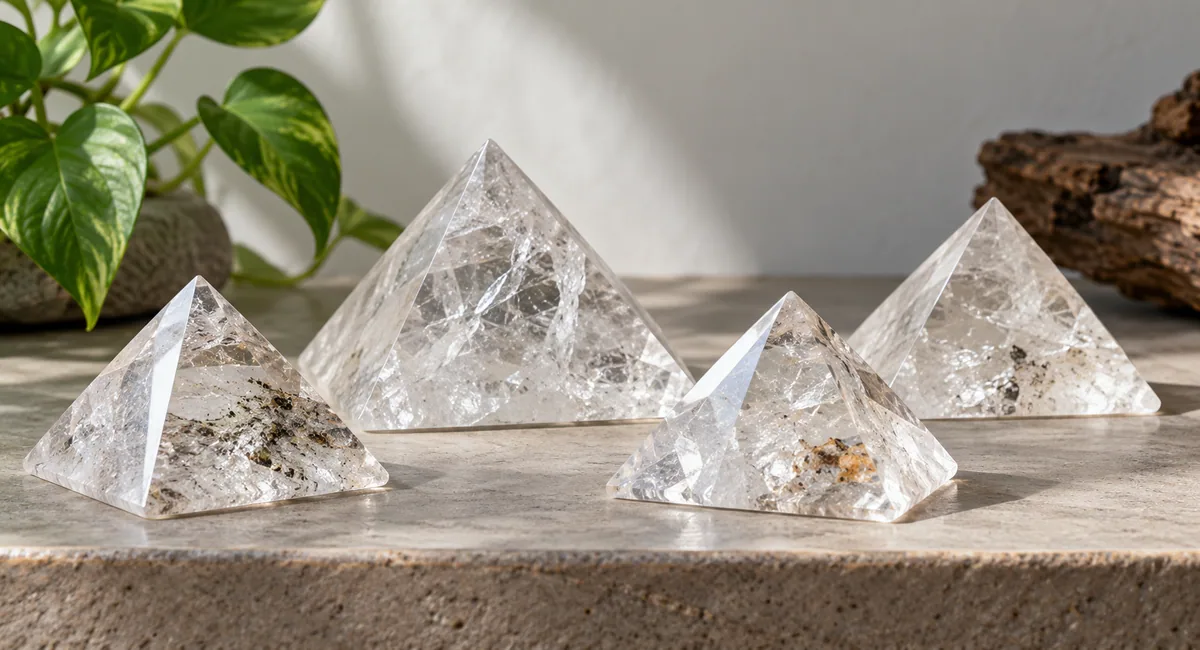
Sphatik is a familiar Indian trade and cultural name commonly used for clear quartz. The name by itself does not establish natural origin, optical clarity or absence of treatment. A display pyramid is cut and polished from material; its square base should not be confused with the natural crystal habit of quartz. Ask the seller to state the material plainly as well as using the familiar name.
Veils, fractures, tiny inclusions and slightly cloudy zones may appear differently through each face. Reflections at the edges can resemble a second apex inside the piece. Look from the base and from an oblique angle to distinguish a reflection from a physical inclusion. Perfect transparency is a visual preference, not proof of stronger spiritual performance.
Clear quartz is easiest to appreciate against a simple background with side lighting. Inspect the base for rocking and keep the apex away from a low shelf above it. Choose a spot outside harsh concentrated sunlight and away from hot appliances. A soft damp cloth followed by drying is usually enough for routine dust; avoid thermal shock and mechanical cleaners when fractures are present.
Is a clear piece always natural? No: clarity does not distinguish natural quartz from laboratory-grown quartz or glass. Is an internal rainbow an added coating? It may be light reflecting at a fracture, but a photograph cannot resolve every case. Do exact pyramid angles certify the mineral? No: geometry concerns fabrication, while identification concerns the material.
Read the Clear Quartz (Sphatik) pyramid guide and Clear, Rose and Smoky Quartz Pyramids: Compare the Carved Forms.

