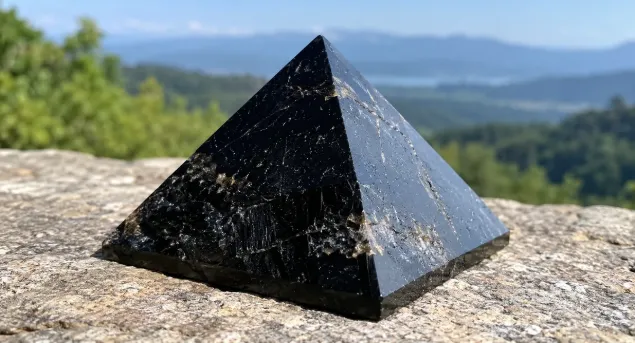
Black Tourmaline Pyramid
An opaque black body with visible mineral character distinguishes this form from glassy obsidian. One carved pyramid.
Call for pricing
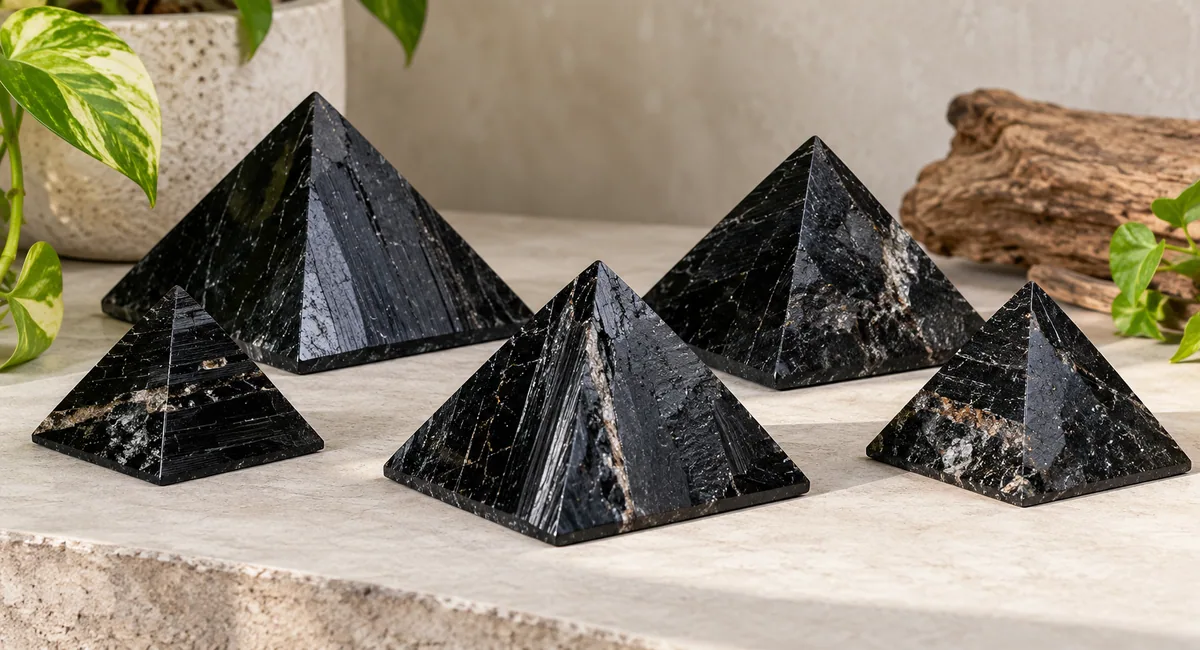
Black tourmaline, often called schorl, can produce an opaque carving with a more mineral-like surface than polished obsidian. Natural seams or pale mineral areas may remain visible in the rough chosen for a pyramid. Those features should be described honestly. A smooth black silhouette alone cannot distinguish tourmaline from other black stones or a manufactured substitute.
Some rough is fractured or intergrown with other minerals. Ask whether the pyramid is carved as one piece, repaired, filled or assembled from fragments. A seam crossing a face may be a natural boundary, but a straight join or glossy filled area needs explanation. The exact construction matters more than an unsupported label such as premium protection grade.
Keep a tourmaline pyramid out of positions where it may be knocked onto a hard floor. Dust with a soft dry brush or cloth and avoid forcing water into open seams. Do not use steam or an ultrasonic bath on a fractured carving. Wrap it separately for transport and protect the point without putting pressure directly on it.
Can tourmaline have pale areas? Yes, rough can contain other mineral material; ask what is present. Do seams prove a fake? No, but repair and filling should be disclosed. Can an ordinary magnet identify it? No: a simple attraction test is not a dependable identification procedure for a finished mixed or treated object.
Read the Black Tourmaline pyramid guide and Black Pyramid Materials: Tourmaline, Obsidian and Shungite.

