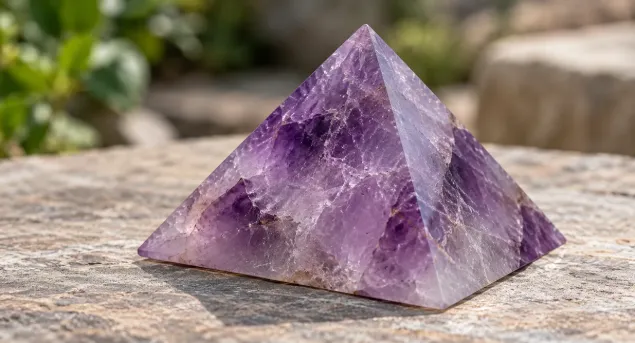
Amethyst Pyramid
Purple zones give this carved form its character. One carved pyramid.
Call for pricing
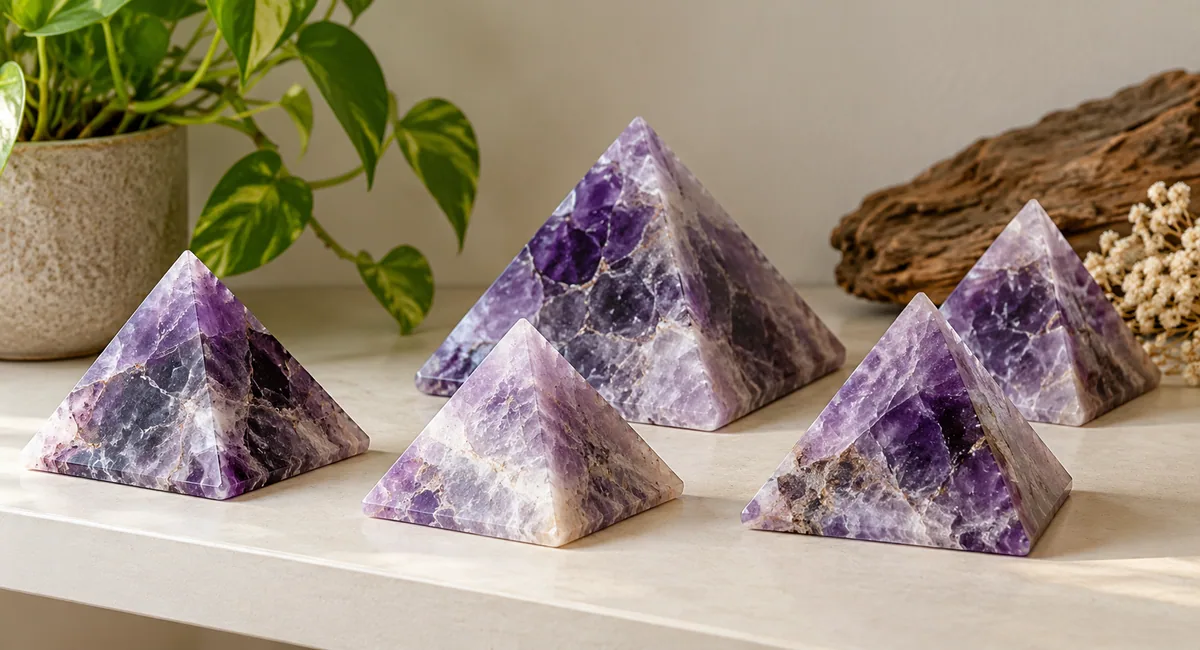
An amethyst pyramid is cut from quartz rough; the four triangular faces and square base are the work of a lapidary. Purple zones, colourless areas and cloudy veils can pass across several faces. A dark photograph does not necessarily indicate a uniformly dark carving. Turn the piece in ordinary daylight and compare its centre, corners and base. Backlighting makes pale areas more apparent but can exaggerate transparency.
Ask for views of all four faces, the base and the apex. An attractive violet face can conceal a pale back or a filled fracture on another side. Judge whether the colour arrangement appeals to you, then inspect the workmanship separately. A natural inclusion is different from an open crack that reaches an edge. Size choices belong under one design when the material and construction remain the same.
Amethyst suits a shelf where its purple remains visible in diffuse light. Prolonged strong light and excessive heat can affect some amethyst colours. A sunny windowsill is therefore a poor permanent display choice. Clean an identified, untreated piece gently with a soft damp cloth and dry it. Avoid steam, sudden temperature changes and ultrasonic cleaning when internal fractures or treatments are uncertain.
Is a darker pyramid automatically better? No: colour distribution, structural condition and workmanship matter as well as darkness. Are cloudy veils evidence of a fake? No: veils can occur in quartz, but their appearance alone does not establish natural origin. Should every face look identical? No: different cutting directions and internal zones can produce a deliberately varied display.
Read the Amethyst pyramid guide and Clear, Rose and Smoky Quartz Pyramids: Compare the Carved Forms.

