Colour and character
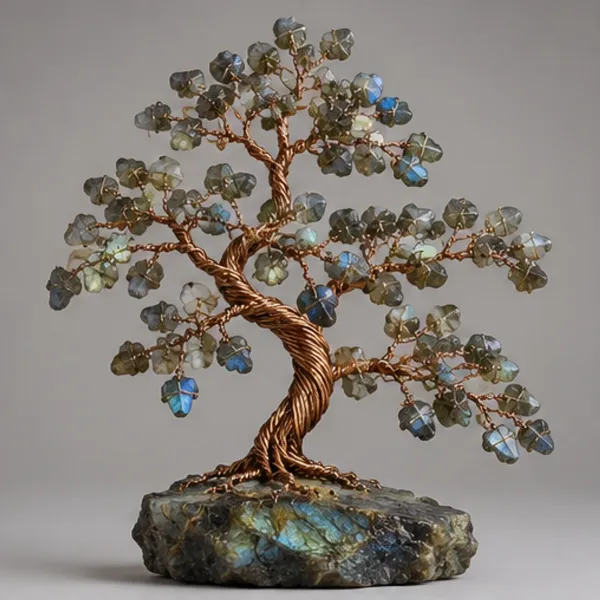
A labradorite tree offers a display that changes with your position. Much of the crown may look quietly grey-green until light reaches a particular chip at a suitable angle. A selected flash can then draw attention to one branch group before another part of the canopy takes over. The layered, asymmetric form gives room for that variation. A visible twisted trunk and modest base hold the whole design together, making it as much an object of shape as an exercise in colour.
Enjoying the gemstone palette
Selective optical effects should not be confused with a permanent electric-blue glow. The appearance depends on the actual chips, their orientation and the light in the room. An appealing labradorite display includes both the quieter surfaces and occasional brighter passages. A useful comparison with moonstone or sunstone explores those different visual effects, rather than assuming that every feldspar looks or behaves the same way.
An easy place to display
Try a stable shelf with a simple backdrop and gentle light from one side. Turn the complete tree a little by moving the base, then step back to see the overall result. There is no need to chase an angle that makes every chip flash; that can hide the more attractive branching silhouette. Moonstone offers softer colour and sheen, while sunstone brings a warmer sparkle to a related display.
Personal meaning
In contemporary crystal symbolism, labradorite is sometimes connected with change or imagination. A tree can make that into a personal reminder that a familiar object may look different from another viewpoint. It is a thoughtful idea for a gift or a creative workspace without a promise that the tree will create a particular experience.
Care for the whole tree
Support the base when moving the tree and keep chip clusters from striking one another. A clean, soft dry brush removes ordinary dust without repeated handling. Do not keep bending branches to manufacture a stronger flash or put the assembly into a soaking routine. Protect it from knocks, heat and chemical sprays that may affect different components.
Questions about this design
Why does the flash disappear when I move?
A selective reflection depends on the angle between material, light and viewer. A quieter appearance from another position is part of the expected visual comparison, not a reason to force the branches.
Can I adjust every chip toward the light?
Avoid repeated adjustment simply to intensify an effect. Choose an attractive whole-tree position and move the base gently rather than stressing individual chip attachments.
What makes a useful comparison with moonstone?
Look at the complete form and the different character of the light effects. Moonstone can offer a softer sheen and pale palette, while labradorite may show more selective flashes.Explore this tree in more detail