Meet the illustrative request
Suppose Mr. Sachin wants to understand a suitable Rudraksha for personal spiritual practice. For this example, he supplies 4 April 1978, 5:31 in the morning, and Balasore, Odisha, India. These details are used to explain the request process. We are not publishing a calculated horoscope, a customer's history or a claim that a particular bead has already been selected for him.
Sachin adds a useful question: “Please explain the chart-based reason and suggest a comfortable daily-wear option.” This tells the team what kind of answer would help. It also keeps the astrological choice separate from the fitting, bead size and product budget, which can be discussed after the assessment.
Step one: confirm the information before calculating
The first check is simple but important: does 5:31 mean morning, is the date 4 April, and which Balasore location is intended? The selected birthplace and applicable time zone belong with the birth record. The name identifies whose request this is; it does not replace date, time and place in a chart calculation.
If the time came from a family recollection rather than a record, Sachin should say that it is approximate. The report must keep that uncertainty. Our birth-time guide explains why a neat-looking chart should not be mistaken for proof that every input is exact. Missing information is a reason to clarify, not to quietly guess.
Step two: examine the chart factors used by the method
The calculation supplies chart facts. A practitioner then considers the ascendant, relevant planetary placements and the chart themes connected with the person's question, where the available method supports them. The important point is that a placement and its interpretation are different steps: a planet's name alone does not finish the choice.
For Sachin, the report should say which actual findings informed the discussion. We do not assign him a planetary position or a mukhi in this article, because doing so without a verified calculation and reviewed selection rule would manufacture a reading. A proper example can explain the checks without pretending that the result is known beforehand.
Step three: check the recommendation and its boundaries
The next question is whether a reviewed rule or an individual staff assessment actually supports an option. The explanation should connect the proposed Rudraksha to the findings and identify the tradition or method used. It should also mention exclusions or uncertainty where relevant, instead of presenting one universal planet-to-bead shortcut as everyone's rule.
An assessment can return a supported recommendation, an alternative, a request for more information or a conclusion that a new purchase is unnecessary. Sachin should be able to understand why the answer takes that form. This is the difference between chart-based guidance and a general purpose association.
Step four: compare the actual bead and its use
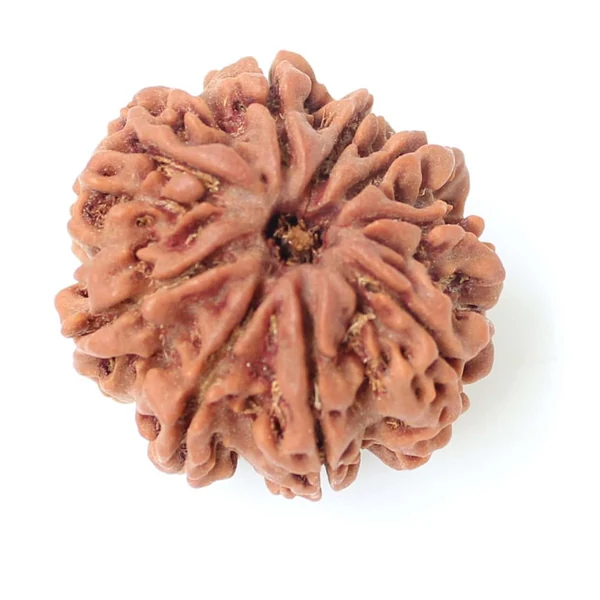
Only after the reasoning is clear should Sachin compare the available Rudraksha beads. The actual item still needs its own checks: face markings, stated variety, dimensions, condition, fitting and whatever documentation is provided. A suitable category does not automatically approve every listing carrying the same label.
To follow this route, Sachin can submit the free report request, confirm his email and wait for preparation and staff approval. The system was developed with Rasmita Nayak and OmmRudraksha; a report states its actual preparation and review. It should give him a reason he can discuss, without suggesting that the bead guarantees a future event or that the highest-priced option is the best one.
Free Rudraksha Consultation
Request an email report, or share your details and question with our team on WhatsApp. Reports are emailed after preparation and personal review. No purchase is required.
Request Free ConsultationSources and Method Notes
These references provide cultural, practical or material context. Traditional guidance does not establish a guaranteed personal outcome.
- Rudraksha Jabala Upanishad, translated by R. A. Sastri (opens a new tab) — A traditional textual context for Rudraksha; not evidence of a guaranteed personal effect or a universal modern planet-to-bead table.
- OmmRudraksha: how the free report works (opens a new tab) — The actual service process: confirmed email, supported preparation, staff review, a processing delay and a private report link.