Begin with the question behind the bead
A person may ask, “Which Rudraksha should I wear?” while actually wanting three different things: a personal astrological assessment, something meaningful for a devotional practice, or a comfortable mala for regular use. These questions deserve different explanations. Choosing a bead becomes easier when you decide which of them matters most at present.
You do not have to arrive with the answer or the name of a particular mukhi. Write a simple sentence such as, “I want to understand a chart-based choice,” or, “I need a counting mala for my morning practice.” That sentence is more helpful than a long list of promised benefits copied from several product pages.
Route one: a chart-based assessment
An astrological assessment begins with the recorded birth date, time, place and the certainty of that time. The practitioner considers the actual chart findings relevant to the request, then checks the recommendation against the method being used. A single sun sign, a worrying sentence or the price of a bead should not replace that assessment.
The report should explain the connection in ordinary words: which chart theme was considered, why the option was discussed and what remains uncertain. Our worked preparation example shows how a request reaches that stage. If you would prefer help, use the free Rudraksha report form; no product purchase is needed to ask.
Route two: purpose and traditional association
Some people begin with worship, family practice or the traditional meaning of a bead. The Rudraksha Jabala Upanishad gives a devotional context for Rudraksha and different faces. That context should be identified as tradition, rather than converted into a promise that one object will produce the same experience for everyone.
If your family follows an established practice in Odisha or elsewhere, tell the team what you already do and whose instructions you follow. There is no need to replace a familiar practice merely because another shop describes a more expensive option. A purpose-based association can be meaningful without being presented as a completed personal horoscope reading.
Route three: how you will actually use it
A bead worn close to the neck, a bracelet and a counting mala need different practical choices. Consider weight, bead spacing, the fitting, the cord and whether the piece suits your daily routine. Someone who wants to count repetitions may value easy handling more than a large ornamental bead. Someone seeking a discreet pendant may prefer a simple arrangement.
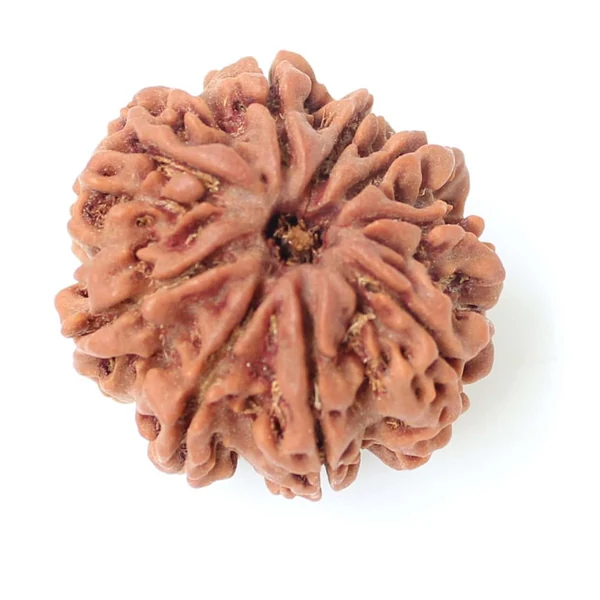
Compare the actual Rudraksha mala formats with that use in mind. A shorter strand is not automatically a weaker spiritual choice, and a larger bead is not automatically the right personal recommendation. Our guide to mukhi, size and buying checks explains what can be inspected separately from suitability.
Ask for a reason, an alternative and a practical instruction
Before deciding, ask three useful questions. What supports this recommendation? What other suitable option exists? How would I wear or use it in the practice we have discussed? A clear answer should not require you to buy immediately. It may also conclude that your existing mala is enough or that the team needs better birth information.
The OmmRudraksha guidance system was developed with Rasmita Nayak. A submitted request uses the available analysis and staff review; its preparation label states the actual review level. You can read the report, ask for clarification and only then compare individual Rudraksha listings. The point is a choice you understand, not a choice made under pressure.
Free Rudraksha Consultation
Request an email report, or share your details and question with our team on WhatsApp. Reports are emailed after preparation and personal review. No purchase is required.
Request Free ConsultationSources and Method Notes
These references provide cultural, practical or material context. Traditional guidance does not establish a guaranteed personal outcome.
- Rudraksha Jabala Upanishad, translated by R. A. Sastri (opens a new tab) — A traditional textual context for Rudraksha; not evidence of a guaranteed personal effect or a universal modern planet-to-bead table.
- Himalayan Academy: What is japa? (opens a new tab) — A first-party traditional explanation of mantra repetition and counting beads; initiation and family conventions are not universalized.
- OmmRudraksha: how the free report works (opens a new tab) — The actual service process: confirmed email, supported preparation, staff review, a processing delay and a private report link.