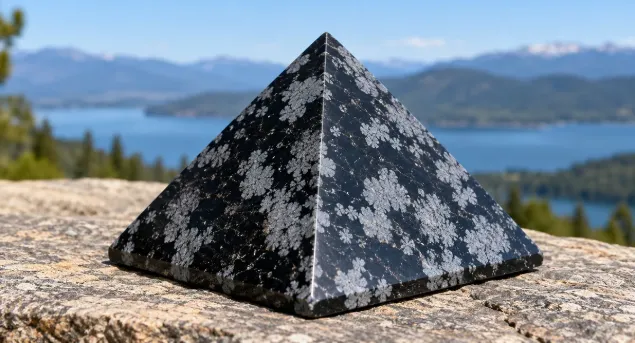
Snowflake Obsidian Pyramid
Pale rounded snowflake-like structures interrupt the dark volcanic glass. One carved pyramid.
Call for pricing
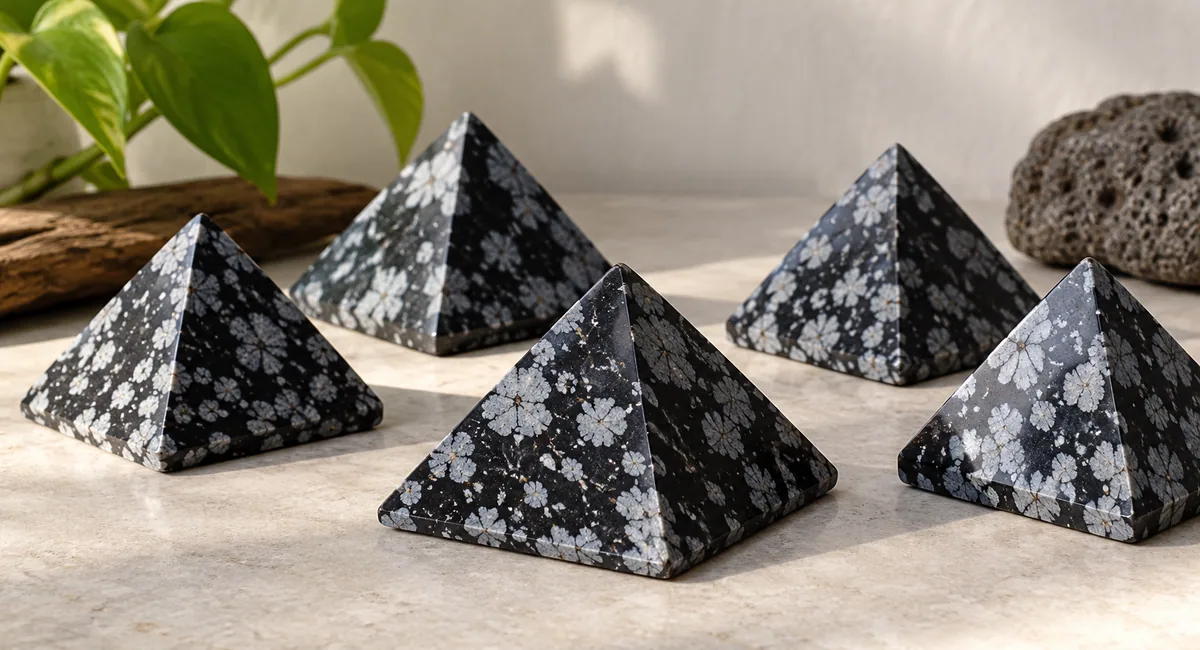
Snowflake obsidian combines dark volcanic glass with pale rounded or radiating structures commonly called snowflakes. These are material features, not painted winter motifs. Their spacing and size can differ strongly across a carved pyramid. A striking front face may lead to a much quieter reverse, so view the entire piece before choosing it.
Although obsidian is naturally formed, its glassy character makes chips and sharp breaks important inspection points. Look closely at the apex and base corners. An old chip can be repolished into a softened edge; that should be disclosed if it changes the outline. Natural origin does not mean a carving is safe to drop or handle roughly.
Use a soft cloth, gentle moisture if suitable and thorough drying. Avoid thermal shock and mechanical cleaners. Place the pyramid where the point cannot meet a moving drawer or a falling book. If it breaks, collect fragments carefully and keep them away from children or pets; do not keep handling a sharp damaged edge as if it were ordinary surface texture.
Must all faces show equal pattern? No. Are pale patches a sign of damage? They can be normal material features; distinguish them from chips at the surface. Is obsidian a quartz crystal? No: it is volcanic glass. Ask for a full view and accurate naming rather than relying on the word crystal alone.
Read the Snowflake Obsidian pyramid guide and Black Pyramid Materials: Tourmaline, Obsidian and Shungite.

