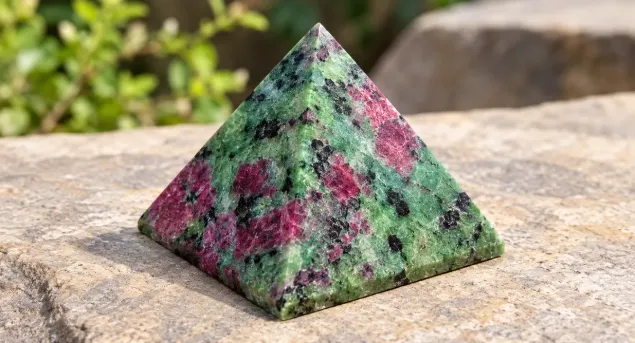
Ruby Zoisite Pyramid
Green rock, red ruby areas and dark inclusions create an irregular contrasting pattern. One carved pyramid.
Call for pricing
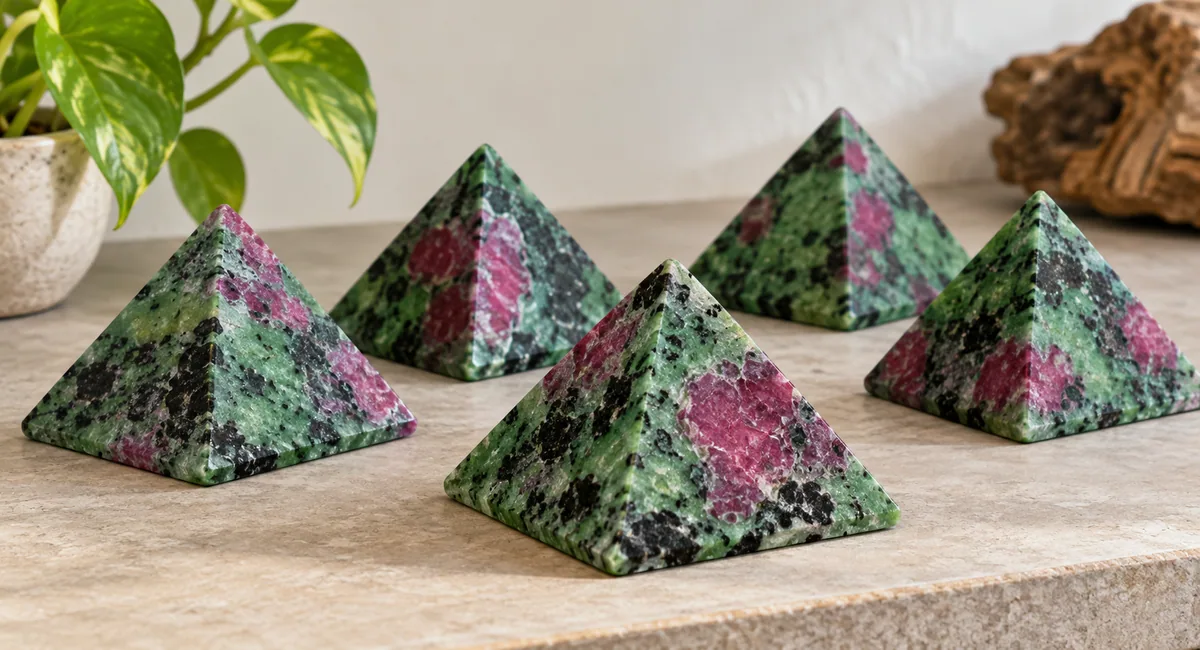
Ruby zoisite commonly describes a contrasting green rock containing red ruby areas and dark mineral inclusions. The appeal is the intergrowth, not the promise of a single uniform gemstone. Large pyramid faces can expose very different proportions on each side. A small red patch on one face does not mean the entire carving is ruby.
Ask for images of the greenest and reddest faces and the underside. Dark inclusions may form part of the pattern; open gaps or repaired cavities still need disclosure. Inspect boundaries between constituents because different materials may polish differently. A slight textural difference can be understandable, while a sharp open seam near the point deserves a condition explanation.
The presence of ruby does not give every constituent the durability of corundum. Use a soft cloth and avoid acids, steam and ultrasonic cleaning. Where moisture is appropriate, wipe lightly and dry rather than soaking. Support the base when moving the carving and keep the apex from knocking against surrounding objects.
Is more red automatically more valuable? Appearance, condition and actual identity matter together. Is the whole piece a ruby? No: the offer is a mixed rock when correctly described. Can a ruby report certify the complete carving’s other constituents? Only the report’s stated scope answers that question; read it rather than assuming.
Read the Ruby Zoisite pyramid guide and Natural, Treated and Manufactured Pyramid Materials: A Buyer's Guide.

