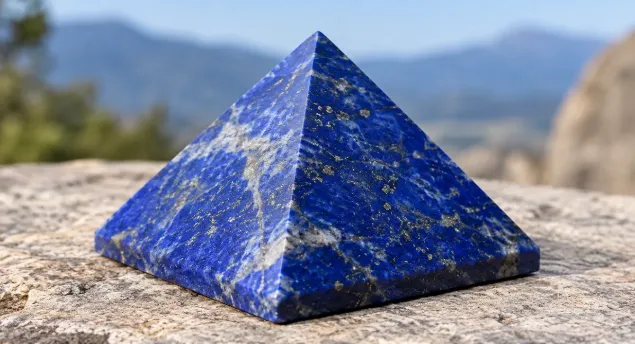
Lapis Lazuli Pyramid
Rich blue areas contrast with pale veining and occasional brassy-looking flecks. One carved pyramid.
Call for pricing
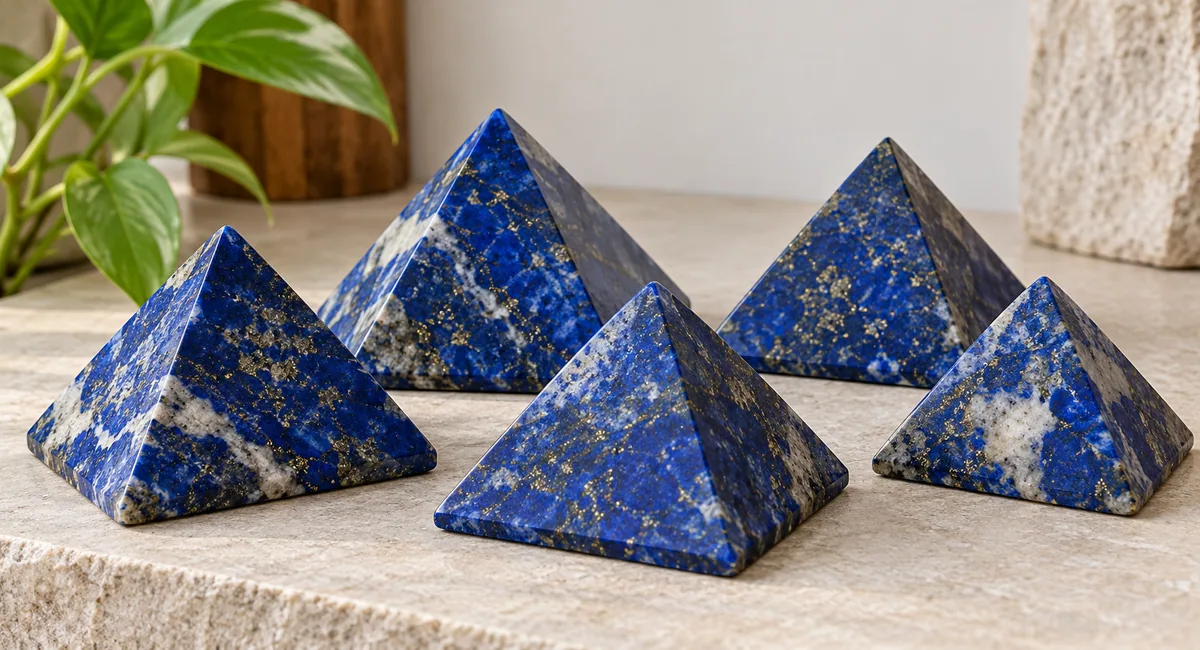
Lapis lazuli is a rock rather than a single blue mineral. Its appearance can include blue areas associated with lazurite, pale calcite and small brassy pyrite grains. On a broad pyramid face these constituents may form a very uneven pattern. Decide whether you like that distribution instead of expecting every face to have the same blue coverage.
Small metallic flecks can be part of lapis, but they are not evidence of gold content or exceptional grade. A piece with little visible pyrite can also be lapis. Ask for images under neutral light and an underside view showing how pale areas continue through the carving. Pattern, workmanship and structural soundness should be considered separately.
A soft lightly damp cloth is a conservative first choice, followed by drying. Avoid steam, ultrasonic cleaning, acids, strong solvents and prolonged soaking, particularly when treatment is uncertain. Do not rub nail polish remover on a visible face to test for dye: it may damage the object. Identity or treatment questions are better directed to a gemmologist.
Is white calcite always a defect? It affects appearance and may affect value, but it can be a normal constituent. Is every blue stone with flecks lapis? No. Will solvent cleaning improve the colour? It can damage treatments. Ask for a clear material description and care advice for the actual piece.
Read the Lapis Lazuli pyramid guide and Crystal Pyramids vs Metal Pyramids: Materials and Construction.

