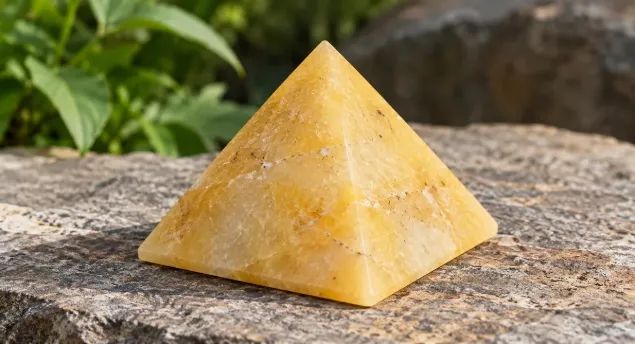
Yellow Aventurine Pyramid
A subdued yellow body offers a quieter colour accent than bright manufactured sparkle. One carved pyramid.
Call for pricing
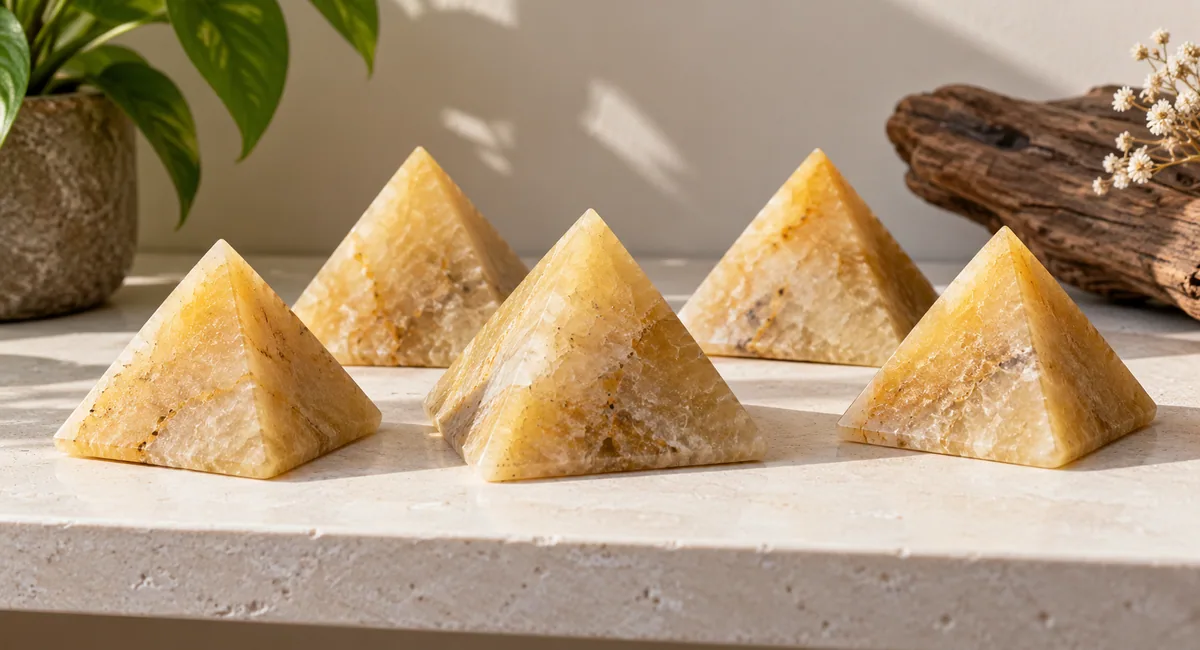
Yellow aventurine is used commercially for yellow quartz-rich material, often described as having reflective inclusions. The name should not be accepted as proof of a particular mineral mixture or natural colour. A plain yellow carving with little visible sparkle may require a more precise explanation of why the supplier uses the term aventurine.
Ask for a neutral-light close-up showing both the yellow body and any reflective inclusions. Yellow calcite, quartz, glass and other materials can look similar in a small picture. Do not rely on the product title alone. A buyer should be told the identified body material and whether dye, heating, coating or reconstruction is known.
Start with a soft dry cloth and keep away from acids, strong solvents, steam and ultrasonic cleaning. Different yellow materials respond differently to moisture and cleaning products. Once identity and treatments are known, follow the appropriate care method for that exact piece. Do not scratch or apply acid to a finished carving as a home identification exercise.
Does every yellow aventurine listing refer to the same material? Do not assume so. Must it glitter as strongly as goldstone? No. Can a seller use natural when treatment is unknown? The statement should specify what natural means and avoid implying untreated colour without evidence.
Read the Yellow Aventurine pyramid guide and Natural, Treated and Manufactured Pyramid Materials: A Buyer's Guide.

