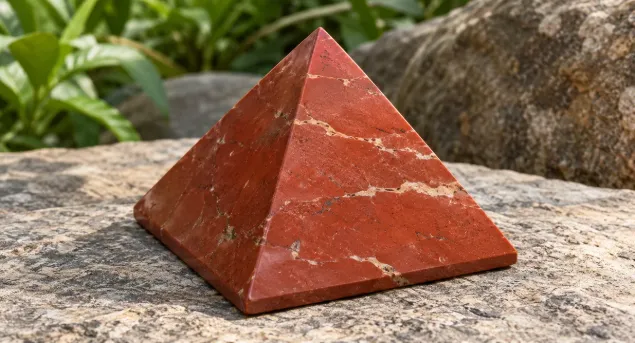
Jasper Pyramid
The first jasper design uses an earthy red appearance rather than an undefined mixed assortment. One carved pyramid.
Call for pricing
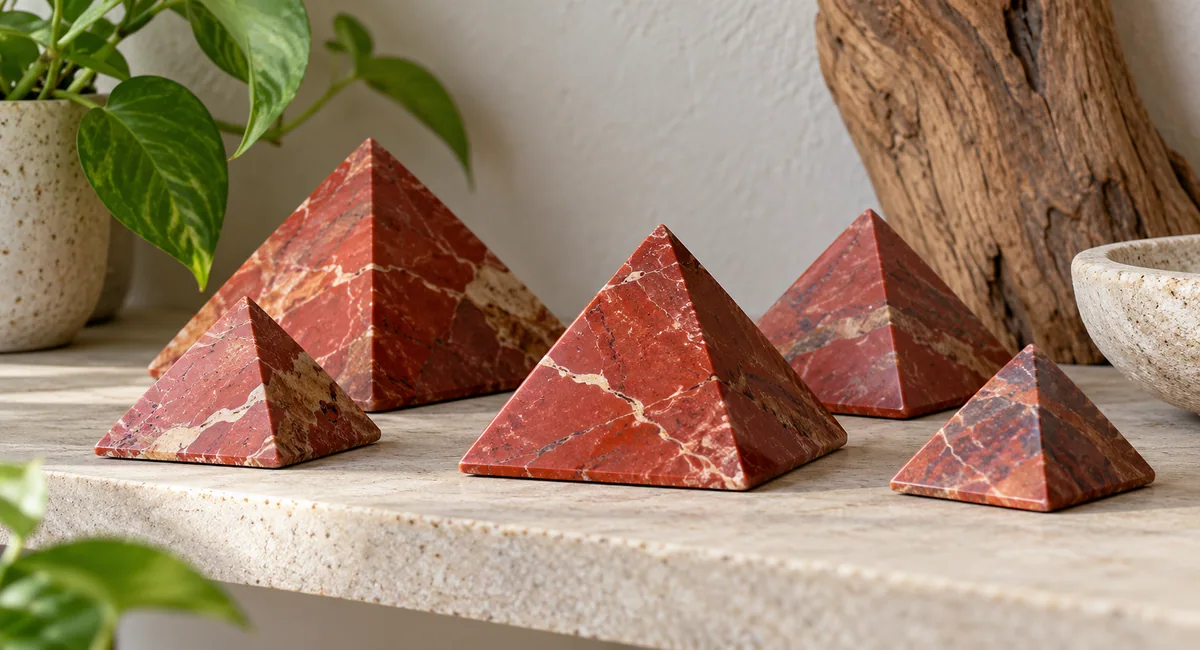
Jasper is used in the decorative trade for many opaque patterned silica-rich materials. A red jasper pyramid and a landscape-patterned carving can look very different even when both are offered as jasper. A useful listing names the particular variety and describes its visible appearance rather than promising a uniform colour for every order.
For the first catalogue design, red jasper is a clearer offer than an unspecified mixed jasper pyramid. Inspect veins, patches and contrasting areas across the faces and base. Additional named varieties may justify selectable choices or separate designs when evidence supports a real material distinction; new page names should not be invented simply to increase the catalogue count.
Check the apex for chips, the base for rocking and veins for open gaps. Dry dusting is a conservative routine; use gentle moisture only when the identified material and any filling allow it, then dry thoroughly. Avoid abrasive polish. Keep each carving in its own padded compartment so a dense edge cannot strike a neighbouring object.
Are all jasper names mineral species? No: many are trade or pattern names. Is every opaque red carving jasper? No. Should three sizes become three different designs? Usually not. Ask for a named material, actual condition and documented measurements before comparing the available options.
Read the Jasper pyramid guide and Agate, Jasper and Bloodstone Pyramids: Reading Pattern and Texture.

