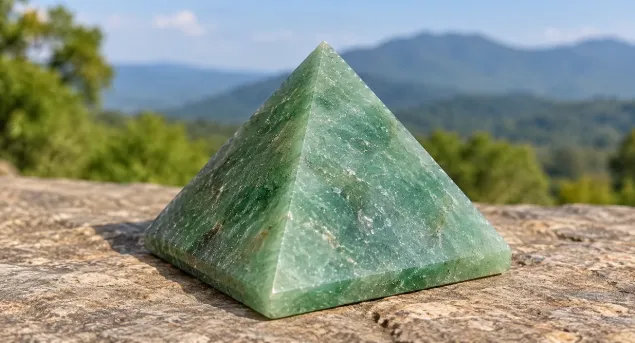
Green Aventurine Pyramid
A medium green quartz-rich appearance is accompanied by a fine reflective texture. One carved pyramid.
Call for pricing
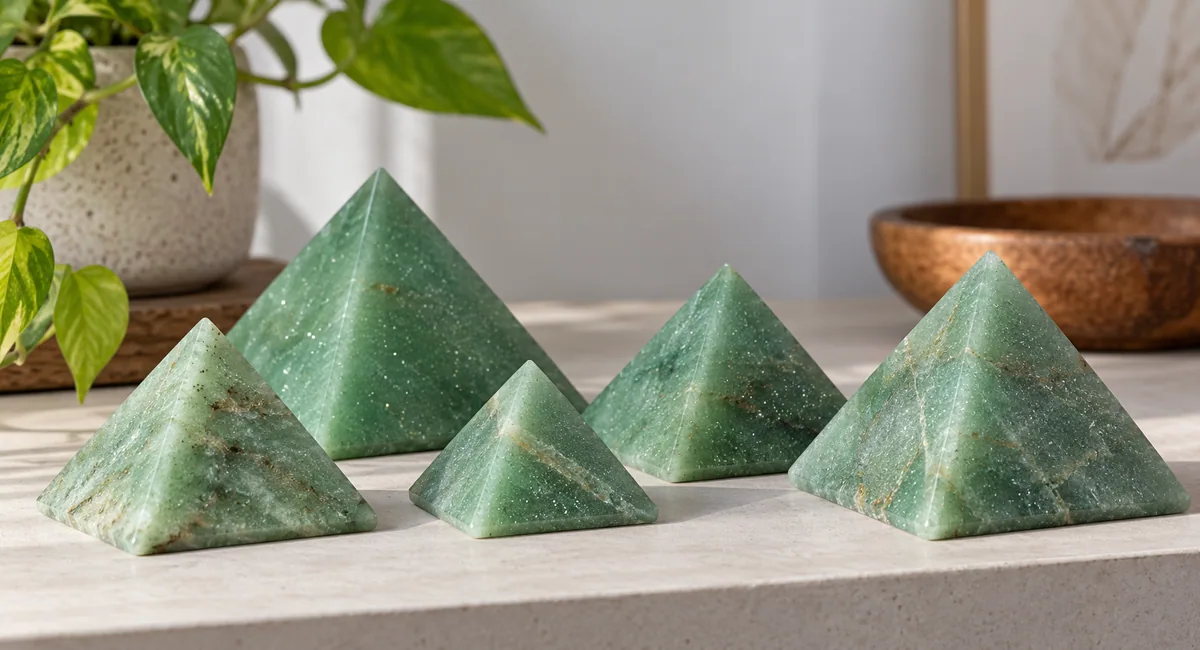
Green aventurine is commonly a quartz-rich material whose appearance includes fine reflective inclusions, often mica. The sparkle may be quiet in ordinary room light. A pyramid face can reveal different concentrations of green and glitter across its broad surface. Strong direct lighting can exaggerate that effect in a sales image.
Green quartz materials, serpentine, jade and glass can all be carved into similar shapes. Ask the supplier to identify the body as green aventurine and explain known treatments. The familiar association between green colour and prosperity does not establish the mineral. A descriptive photograph and an accurate material name are more useful than an invented lucky grade.
Remove loose dust before wiping with a clean soft cloth. Gentle moisture can be suitable when the actual material and finish are known; dry thoroughly afterwards. Avoid household chemicals, steam and ultrasonic cleaning when repairs or treatments are uncertain. Wrap each piece separately during transport to protect the point and polished faces.
Is aventurine jade? No: those names refer to different materials. Does visible sparkle guarantee natural origin? No. Is less sparkle a flaw? It can be a normal variation. Ask what you are buying, whether the image is representative and how the surface has been finished.
Read the Green Aventurine pyramid guide and Natural, Treated and Manufactured Pyramid Materials: A Buyer's Guide.

