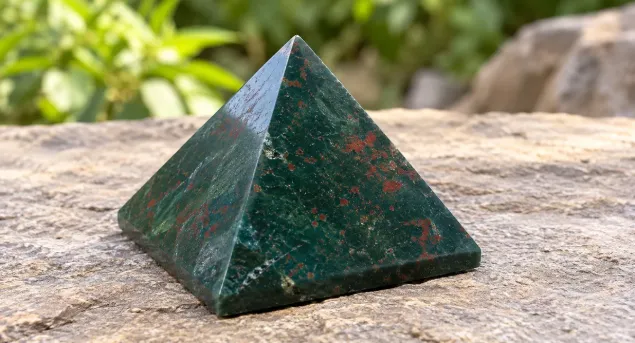
Bloodstone Pyramid
Dark green and scattered red markings give bloodstone its familiar contrast. One carved pyramid.
Call for pricing
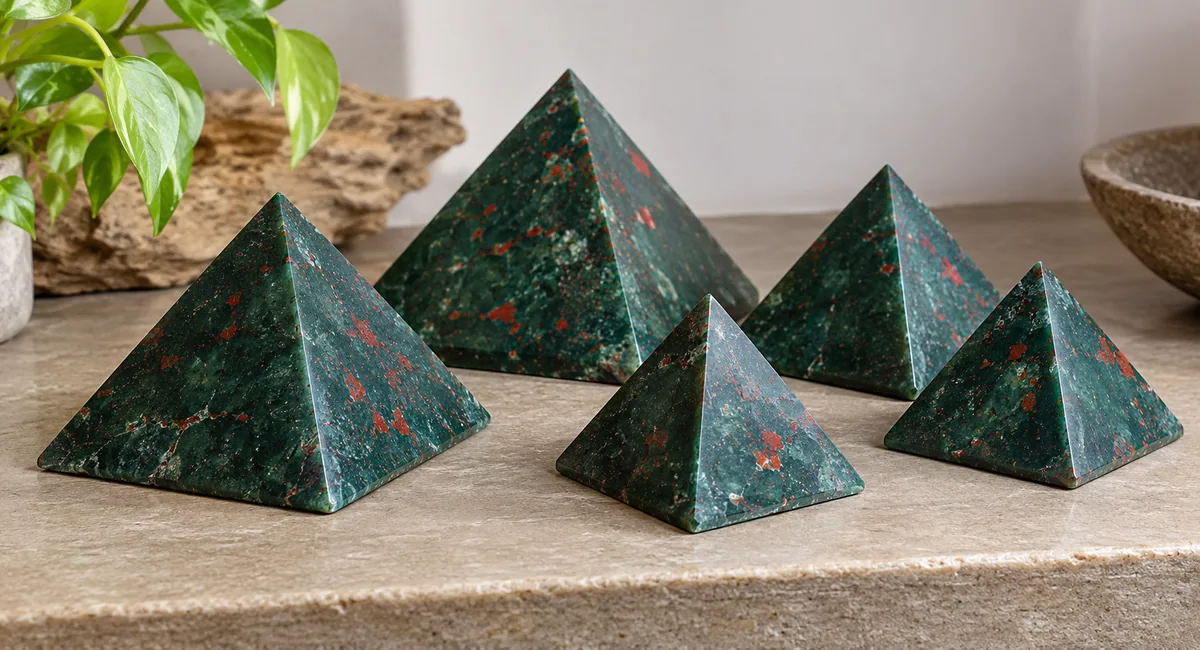
Bloodstone is commonly used for a dark green chalcedony material containing red markings. On a pyramid, the red may appear as sparse dots, broad patches or very little visible pattern on one face. The name describes an appearance and material tradition; it does not mean the carving contains blood or can affect a person’s blood.
Ask to see every face if red speckles are important to your choice. A photograph showing the most patterned side may not represent the back or base. Look for a pleasing balance of green and red, then check chips, open seams and repairs. A more heavily spotted piece is a different appearance preference, not a different guaranteed function.
Remove grit with a soft dry cloth or brush. When the supplied finish permits, a brief gentle damp wipe followed by drying is enough for ordinary cleaning. Avoid harsh chemicals and do not soak a repaired carving. Pack the point so the surrounding padding carries pressure around it, rather than pressing directly onto it.
Does more red mean better quality? It can change visual preference, but condition and workmanship still matter. Is a red spot necessarily painted? No, although treatment questions are reasonable. Can a trade locality prove origin? No: request evidence tied to the supplied material if origin is a deciding factor.
Read the Bloodstone pyramid guide and Agate, Jasper and Bloodstone Pyramids: Reading Pattern and Texture.

