
The weight in a gemstone name is only one part of a size decision. The space a stone occupies in a setting depends on its measured outline and depth as well. Choose from the actual measurements, not from an enlarged product photograph or a rule that assumes every stone of one weight has the same dimensions.
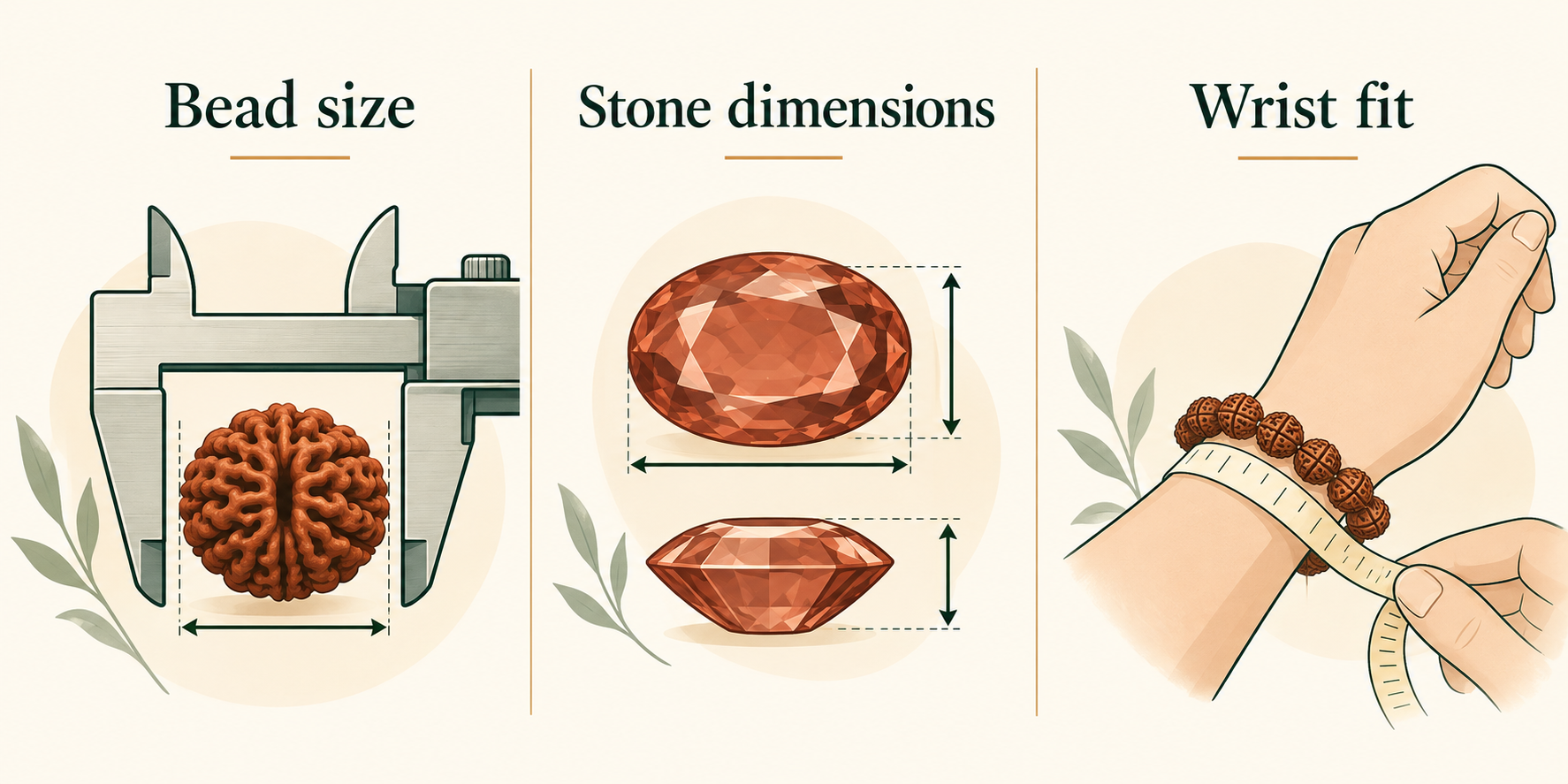
Weight and visible size answer different questions
A listed carat weight describes the stone's mass. Length and width describe its outline, while depth matters for clearance and setting design. Two stones with the same listed weight may have different shapes and proportions. Ask for the measurements of the item you are considering rather than borrowing dimensions from another product.
Do not convert an unclear local weight term to carats without knowing the convention being used. Ask the store to confirm the stated weight and unit. Keep the product code with that confirmation so it cannot be confused with a similar-looking stone.
Measure the available space
For an existing setting, ask a qualified jeweller to check the opening, seat and depth allowance. A photograph of the ring or a rough outside measurement may not show these constraints. Confirm whether the proposed stone can be mounted securely and whether alterations are needed.
For a new setting, begin with the appearance and wearing profile you prefer, then discuss the actual stone's measurements. Consider height, daily activities, the proposed mount and contact with surrounding stones. A stone's dimensions do not establish whether its material or treatment is suitable for a particular cleaning or repair process.
Read the image and report together
Product images are usually larger than the physical stone. A close-up is useful for detail, but it should not be used as a ruler. Request a measurement photograph or an agreed scale reference if dimensions are absent. Our photo and colour guide explains further image limitations.
Every Omm product includes a DGTL certificate. Compare its measurements and identifying details with the listing. Treatment and geographic-origin findings must be read from their specific report; matching size alone does not establish them.
Before requesting customization
Send the product URL or SKU, intended ring or pendant format and any existing-setting measurements. Ask for a confirmed design, supplied metal details, complete price, expected dispatch and applicable return or alteration terms. Do not assume a photograph of a loose stone includes a finished ring.
If an additional report is important to your decision, arrange it before mounting and confirm its timing. Keep the original listing, quotation and document together. Browse yellow sapphire, blue sapphire and emerald listings to compare actual available weights, then obtain the missing dimensions for the piece you prefer.
