
A comfortable bead or assembly is easier to use regularly. Choose from the measurements of the item you plan to buy rather than its apparent size in a close-up. Bead diameter, complete mala length and bracelet circumference describe different things.
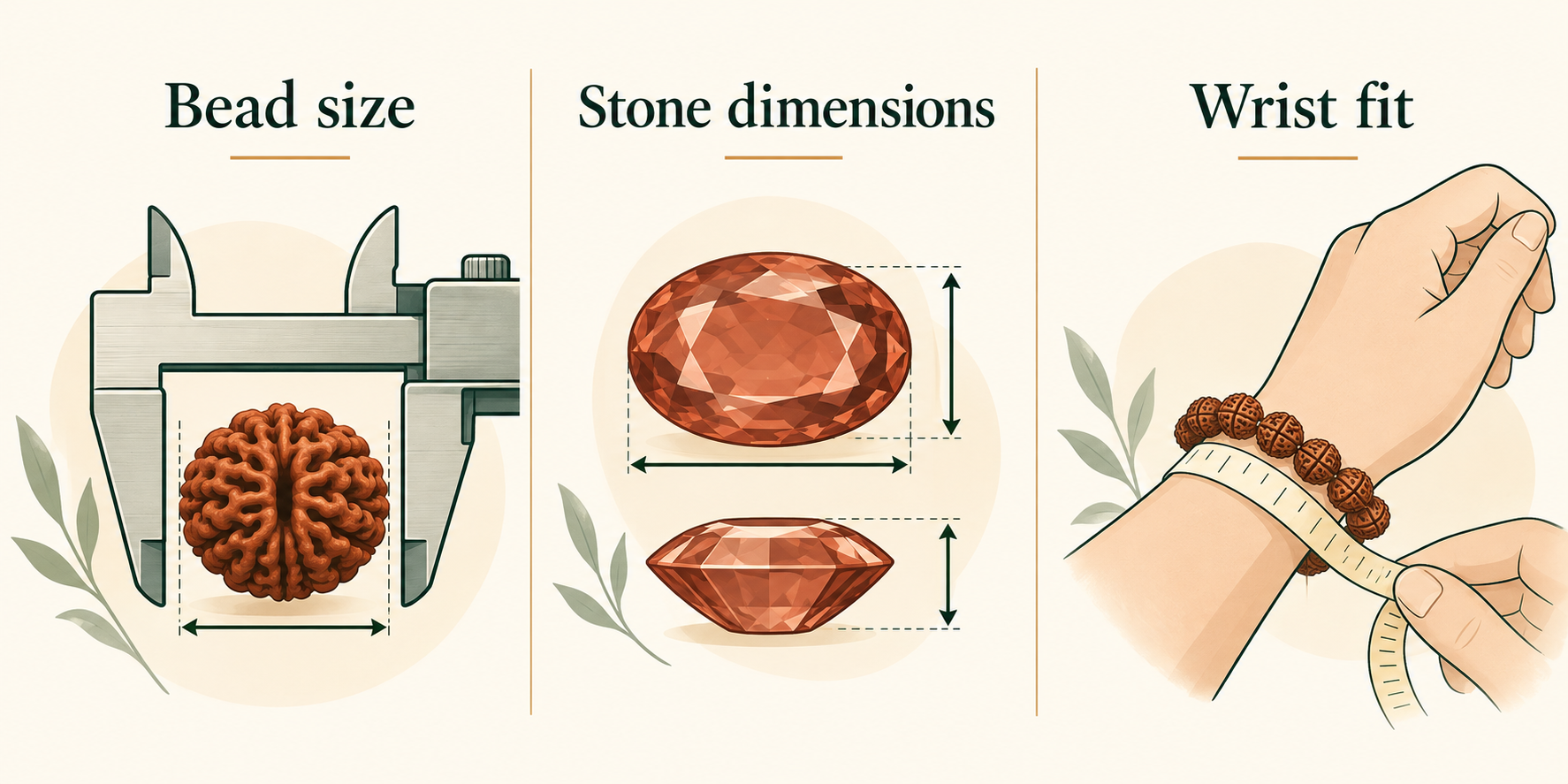
Measure the bead you are comparing
A natural bead may have an irregular outline. Ask how the seller measured it and whether a listed range covers a version, batch or the particular bead shown. A ruler or caliper photograph can help clarify a missing dimension, but the product reference must match the image.
Mukhi describes the listing's face classification, not the millimetre size. A larger bead does not by itself establish a different spiritual effect, authenticity or origin. Compare the dimension that matters for your use together with the item description and report.
Understand mala length
Ask whether a measurement describes the whole loop, the hanging drop or the string laid out straight. Do not treat these as interchangeable. Bead diameter, bead count, knots, guru beads and metal connections all affect the completed assembly.
Use a comfortable necklace you already own as a practical reference, then ask for the corresponding measurement of the offered mala. Consider whether you will wear it over clothing, use it for japa or both. The mala guide explains further construction choices.
Check bracelet fit
Measure your wrist at the intended wearing position and tell the team how you prefer the bracelet to sit. Ask for its usable inner circumference or adjustment range, not just the outside bead-to-bead length. Large beads and rigid connectors can affect fit.
Elastic, sliding-cord and clasp designs behave differently. An adjustable design is not automatically suitable for every wrist, and elastic should not be overstretched. Confirm any sizing or alteration service and its terms before purchase. Browse bracelets for the currently listed formats.
Keep the version and measurements together
If the product offers different bead sizes or lengths, specify the version in your enquiry and order. Keep the agreed size with the SKU, photographs and quotation. A measurement copied from another version can create an avoidable mismatch.
On receipt, check the assembly gently before altering or wearing it if you have a sizing question. Read the return policy first. Do not cut a cord or remove a fitting as a measurement experiment. A clear size confirmation is more useful than a claim that an item suits everyone.
