

Cleaning, storing and maintaining wind chimes begins with one principle: treat the entire hanging as a moving structure, not only as decorative metal or bamboo tubes. Sounding elements, upper supports, strikers, wind sails, cords, rings and attached ornaments can age at different rates. A bright polish on a tube cannot make a frayed suspension safe, and one cleaner cannot suit every component.
This practical guide explains how to inspect a wind chime before taking it down, clean different materials gently, prevent cord tangles, recognise damage, protect the sound of a tuned design, pack the assembly for seasonal storage and reinstall it with adequate clearance. The method is deliberately conservative: where a product's metal, coating or cord type is unknown, verify its maker's instructions before changing the finish or suspension.
1. Begin with a full inspection, not a polishing cloth
A quick inspection is worthwhile whenever a chime has been exposed to heavy rain, strong wind, long sunlight or repeated contact with a nearby surface. Examine it from top to bottom. Begin at the load-bearing hook and top ring, then look at the support, suspension cords, holes through tubes or decorations, striker, wind sail and lowest hanging pieces. Pay particular attention to places concealed beneath caps or knots.
Look for cords that are frayed, flattened, brittle or rubbing against sharp holes. Check whether rings are opening, a wooden cap has split, a glass ornament is loose, or a tube has developed an edge that can cut the suspension. A brown surface mark is not automatically a structural problem, but a loose load-bearing fitting deserves attention even if the rest of the chime looks new.
Photograph the entire hanging from several angles before taking it apart. For a tuned model, document the order and length of the tubes and their original suspension points. This avoids confusion during reassembly and helps preserve the maker's intended sound arrangement.
2. Take the wind chime down safely
Choose calm, dry weather. Do not stand on a wet railing, lean outside a balcony or climb insecure furniture to reach a hanging. Support the entire assembly securely before releasing the upper hook. Do not attempt to hold a heavy or awkward chime in one hand or lift it by its sail or a tube. Use a qualified installer where the weight, height or access makes safe removal uncertain.
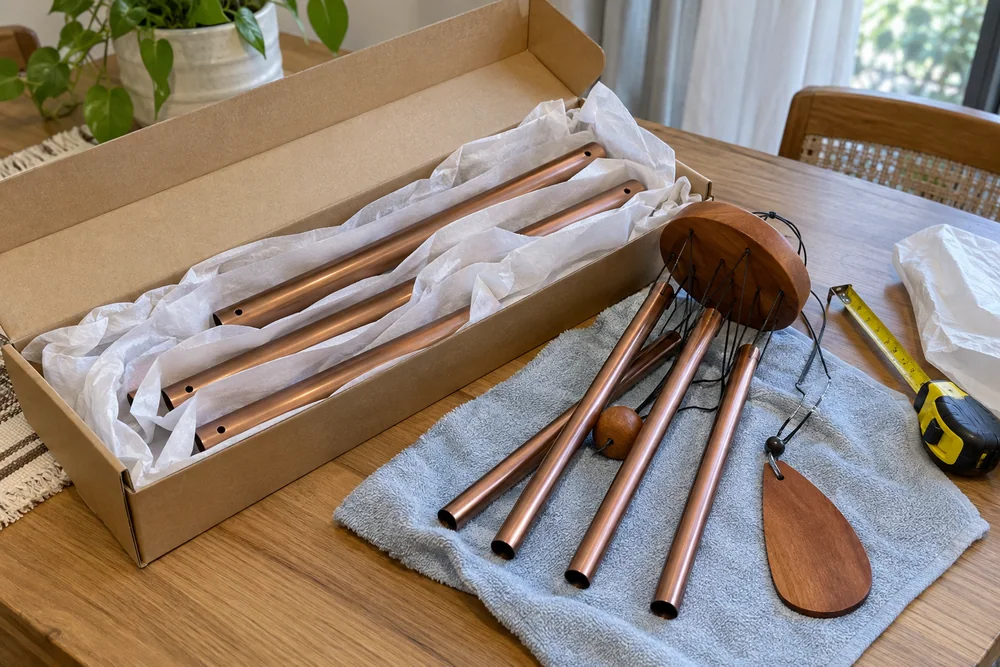
Move the item onto a clean, padded surface such as a soft cloth or towel. Let tubes and bells settle individually before trying to untangle the suspension. Pulling knots tight or dragging a metal piece across glass can introduce new damage. For tall or spiral chimes, suspend the top temporarily from a secure indoor support so the separate hanging lines can be seen clearly.
Where a chime has exposed sharp metal, broken ceramic, cracked glass or a dangerously weak cord, stop using it until the affected part has been assessed. Do not return an unsafe item to a busy doorway.
3. A simple routine: dust, assess, clean, dry
- Read the product-specific care guidance. Determine which parts are metal, wood, bamboo, shell, glass, stone, plastic, painted or plated.
- Remove loose dry dust. Use a soft lint-free cloth or gentle brush while supporting the sounding elements.
- Assess stains rather than immediately polishing. Distinguish ordinary patina, finger marks, coating wear, deposits and possible structural corrosion.
- Apply moisture only if permitted. For a confirmed compatible finish, a lightly damp cloth may be appropriate; avoid soaking cords, wood, adhesives or unknown coatings.
- Dry allowed damp-cleaned components. Do not leave moisture in drilled holes, knots, wooden caps, metal joints or between adjacent pieces.
- Inspect after cleaning. Check that the striker and wind sail move freely and that no connectors were loosened.
Vinegar, lemon juice, abrasive metal polish and household bleach are not universal wind-chime cleaning products. They may attack coatings, affect copper alloys, stain stainless surfaces or harm bead and cord attachments. A conservative dry method is preferable when the exact materials are still unknown.
4. Cleaning metal wind chimes by material and finish
Aluminium: Many tubular chimes use aluminium, but the surface may be anodised, painted, powder-coated or otherwise finished. A copper or bronze colour may be an applied finish rather than the base metal. Begin with dry wiping; avoid polishing a coloured surface as if it were uncoated brass. Inspect tube holes and ends for wear where suspension lines move.
Copper and brass: These may darken with exposure. Some owners prefer the resulting patina, while others want a bright surface. The Canadian Conservation Institute distinguishes cleaning from polishing and notes that polishing removes material and may interfere with protective lacquers or valued patinas. Identify bare metal, plating and coating before using any polish. Never assume that every copper-coloured chime contains solid copper.
Stainless steel: Grade and environment affect corrosion resistance. The British Stainless Steel Association advises avoiding chloride-containing cleaners, including hypochlorite bleaches, and ordinary carbon-steel wool that can contaminate surfaces. For verified stainless finishes, the maker may allow mild detergent cleaning followed by appropriate rinsing and drying. Do not assume every silvery tube is stainless or that stainless components can never stain.
Painted, lacquered or plated pieces: Protect the coating. Scratches at suspension holes and striker contact points may expose another material underneath. Avoid aggressive scrubbing and solvents unless explicitly approved for the specific finish.
| Material or surface | Conservative first step | Avoid without verification |
|---|---|---|
| Painted or anodised aluminium | Soft dry cloth, inspect coating around contact points | Abrasive polish, acids, scraping and unknown solvents |
| Bare copper or brass | Gentle dust removal; decide whether to preserve patina | Assuming patina is dirt or that aggressive brightening is required |
| Plated or lacquered copper alloy | Identify finish; follow the maker's stated cleaning method | Polish that wears through plating or damages lacquer |
| Stainless steel | Remove deposits gently with maker-approved materials | Chloride bleach, contaminated steel wool and harsh abrasive cleaners |
| Mixed-material assembly | Identify the most sensitive component before cleaning | Soaking the entire hanging in one cleaning solution |
For comparisons of real material families, see Metal Wind Chimes and the related Aluminium Tube Wind Chime, Brass Tube Wind Chime and Copper Tube Wind Chime. Product materials must be independently verified for each stocked model.
5. Bamboo, coconut shell and wooden components
Bamboo chimes often use hollow sections as the sounding pieces and may include a wooden or coconut-shell upper support. Bamboo can change with humidity, lose its finish, develop splits or suffer damage at suspension holes. Do not leave bamboo soaking in water or apply an unapproved oil simply to restore sheen. Check whether a manufacturer's protective coating needs renewal and follow that product's instructions rather than a rule copied from a different maker.
Coconut shell and wood are different materials. A shell may act as a cap above bamboo tubes, while wood might form a striker, frame or ornament. Drilled holes and connecting knots need inspection. Cracks in a load-bearing wooden cap should be treated more seriously than a superficial colour change.
Woodstock Chimes' published care guide recommends periodic treatment for certain finished wooden components in its own product ranges. That does not mean every OmmRudraksha chime should receive varnish each spring: wood species, coating, manufacturer and age differ. Confirm the supplied object's care before applying any surface product.
When in doubt, dust gently, keep the assembly dry and sheltered, and ask for the actual material and finish details before more intensive cleaning.
6. Glass, gemstone, ceramic, shell and decorative beads
Mixed-material hangings may use glass prisms, faceted beads, stones, ceramic bells, shells or metal motifs attached to a sounding assembly. These pieces can chip, scratch or break when allowed to collide with tubes or a hard wall. Their mounting points and connecting wire may be more vulnerable than the ornaments themselves.
Do not assume every coloured bead is a natural gemstone. Dyed stone, glass, resin and ceramic can look alike in a photograph and require different care. Avoid soaking unidentified beads and prevent metal cleaner from spreading onto porous or coated decorations. Hold fragile components steady while wiping the neighbouring tubes.
For a prism hanging, prevent impact with windows or rails. Keep glass and reflective ornaments out of direct sunlight, including changing seasonal sun paths: concentrated sunlight can ignite nearby combustible materials. If a cracked glass piece or loose gemstone could fall, take the hanging down until safely repaired.
7. Check cords, knots, rings and suspension points
The cord may be the most important service-life limitation of a chime. Inspect every load-bearing strand, including sections that pass through metal holes, knots beneath wooden caps and the links carrying a heavy wind sail. Sunlight, abrasion, weathering and repeated vibration can weaken a line even when it remains the same colour.
Warning signs include frayed fibres, whitening or cracking, a visibly stretched knot, a tube that hangs at a new angle, opened metal rings or sharp burrs at cord holes. Loose pieces should not be held in place with an arbitrary extra knot or adhesive patch, particularly above people. Where replacement is permitted, use the maker's recommended cord type and threading plan.
For a tuned wind chime, suspension-point position can influence tube vibration and sustain. Replacing the cord should preserve the maker's tube order, spacing and support arrangement. Do not drill a new hole or shorten a tube simply to simplify a repair. If the assembly design is unclear, seek a manufacturer-approved replacement procedure.
8. Should you restring a wind chime yourself?
Simple, lightweight chimes sometimes permit restringing using instructions from the original maker. More complicated tuned, spiral, glass-heavy or large outdoor assemblies deserve greater care. Before starting, document each tube position, knot and connection with photographs and measurements. Determine whether the cord is a normal replaceable part or forms part of a proprietary support system.
Do not substitute weak thread, old fishing line or an improvised adhesive joint solely because it looks similar. The correct line needs adequate strength, abrasion resistance, compatibility with the holes and suitable behaviour in the expected weather. Knots must be appropriate to the chosen line and assembly, and the upper support must remain reliable.
If the maker supplies a replacement kit, use it. If not, the safer option for a heavy or structurally uncertain hanging may be professional repair or replacement. A newly strung item should be inspected and tested in a controlled position away from people; avoid mounting above busy doorways or occupied areas.
9. Monsoon, coastal air, dust and seasonal exposure
Indian weather presents different maintenance demands. A sheltered veranda may be protected from direct rain but still receive wind-driven water and humid air. Monsoon conditions can increase wetting of cords, wood and metal joints. In coastal settings, deposited salts can accelerate corrosion of inappropriate fittings and cause stainless steel staining. Dry and dusty areas introduce their own challenge: particles can accumulate where a striker repeatedly contacts a tube.
Before severe weather, inspect the upper hook, load-bearing cords and movement clearance. If the complete item is not verified for strong wind and prolonged rain, take it indoors while it is safe to do so. Do not climb a ladder during storms or try to immobilise the hanging with heavy added weights; such changes can increase loads and create collision hazards.
A chime that is advertised as weather-resistant still needs component checks. Stainless tubes may be robust while the top wood, paint, cords or decorative beads are not. Follow the limits of the most weather-sensitive part rather than assuming the whole hanging matches its strongest tube material.
10. Pack a wind chime so it does not tangle or scratch
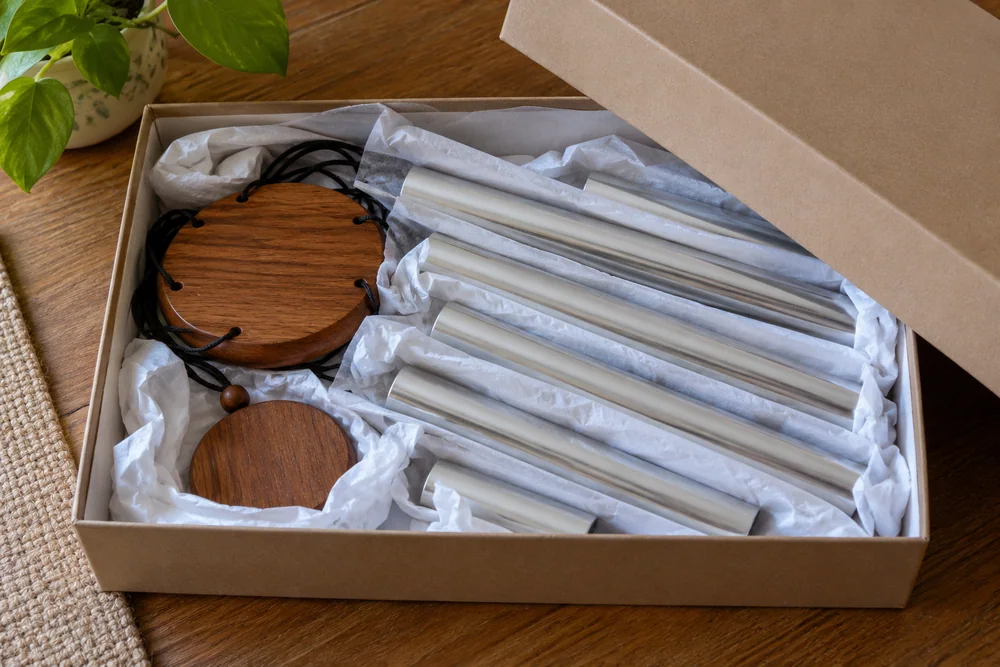
Good storage begins with a clean and fully dry object. Set it on a padded surface, document its arrangement, and prevent sounding elements from striking one another during handling. Use clean, soft packing between tubes and fragile ornaments. Avoid abrasive, dirty wrapping or tight materials that press on thin decorative shapes.
Do not wind all suspension cords into one tight knot. Instead, gently group and support the parts according to their levels, particularly in spiral chimes and long tubular models. Protect glass, shell, ceramic and decorative motifs separately where possible. Packing should not put a crushing load on the upper frame or wind sail.
Choose a dry, protected location away from leaks, prolonged sunlight and heavy items. If the material is permitted to be packed after damp cleaning, ensure no residual moisture remains trapped in knots, holes or wooden caps before the package is closed. Periodically inspect stored natural materials for dampness or damage.
11. Reinstalling after seasonal storage
Before rehanging, examine the main hook and support separately from the wind chime itself. A structurally sound tube assembly is not safe if the ceiling hook is loose, corroded or mounted in weak trim. Check the complete weight and the intended type of fixing; do not assume a lightweight picture hook is suitable for a large moving hanging.
Hold the chime so its suspended elements settle, then verify that every tube, bell and wind sail moves freely. Open any nearby door to its full extent. Allow clearance from windows, walls, rails, plant branches and anything a gust could cause the object to strike. Place it outside the normal reach of small children and pets, away from flames, fans and fragile objects.
Listen in gentle airflow and observe how often it rings. A chime that sounds pleasantly during the day may be disruptive at night, especially near bedrooms and neighbouring flats. Reposition it when necessary. If the chime's sound or alignment has changed after maintenance, inspect the assembly rather than forcing parts together to reproduce its previous tone.
12. At-a-glance maintenance checklist
| When | What to inspect | Action if an issue is found |
|---|---|---|
| Before first hanging | Real materials, finish, full drop, weight, support and swing clearance | Confirm manufacturer details and choose a suitable secure mounting point |
| During regular dusting | Tubes, coated surfaces, motif edges, striker and exposed cords | Dust gently and follow finish-specific cleaning instructions |
| After unusually strong wind or rain | All load-bearing connections, displaced tubes, knots, cracks and collisions | Take down safely if weakened; repair or replace before reuse |
| Before the monsoon or seasonal storage | Weather rating, moisture, vulnerable wood, beads, glass and fittings | Move indoors before hazardous weather when appropriate |
| Before reinstallation | Top hook, cord condition, tube arrangement, wind sail, door clearance | Reassemble using confirmed guidance and test in a safe position |
13. Maintenance, sound and traditional home placement
Traditional Vastu Shastra concerns buildings, orientation, access, ventilation and spatial arrangement rather than imposing one universal cleaning method for modern wind chimes. Contemporary Vastu-inspired décor sometimes relates a moving chime to Vayu (air) and sound to Akasha (space). These symbolic associations do not replace sensible material care or safe installation.
The Chinese Feng Shui metal-phase system is different from the Indian Pancha Mahabhuta framework. Modern advice about west or northwest metal chimes should not override household comfort, secure fixing or a product's true weather rating. A wind chime also differs from the intentionally rung ghanta used in Hindu worship; near a puja or meditation space, the family may prefer quiet rather than repeated outdoor-driven ringing.
See the Vastu Shastra overview for broader traditional principles, and browse Hangings & Chimes for other suitable home-decoration styles.
Frequently asked questions
How often should I clean a wind chime?
There is no universal fixed interval. Dust and inspect regularly according to exposure, and check the complete hanging after strong winds or unusually wet conditions. Follow the actual maker's care schedule when available.
Can I wash a wind chime by soaking it in water?
Not as a general method. Many hangings combine metal, wood, cords, coatings, adhesives and decorative pieces that should not be soaked. Verify the materials and follow maker-approved cleaning.
Should I polish every copper- or brass-coloured chime?
No. The colour may be a paint or plating over another metal, and patina may be intentional. Identify the actual base and finish before using polish.
Can I use bleach or steel wool to clean stainless-steel chimes?
Avoid chloride-containing bleaches and ordinary carbon-steel wool. They can contribute to staining or corrosion and are discouraged by stainless-steel industry guidance.
How do I stop a wind chime from tangling in storage?
Dry it fully, keep the parts separated and lightly supported, and avoid winding all the strings into a tight knot. Preserve each level's arrangement, especially for spiral designs.
Can I replace a broken cord myself?
Only when the original assembly and appropriate replacement procedure are known and the repair can be performed safely. Large or tuned designs may require manufacturer instructions or professional work.
Does cleaning change the sound of a tuned wind chime?
Gentle surface dusting should not intentionally alter the tune, but changing suspension position, shortening a tube or modifying the striker can affect the resulting sound.
Can a wind chime remain outside all year?
Only if the complete assembly is confirmed suitable for the local conditions. Extreme wind, monsoon rain and coastal deposits can affect cords and supports even when metal tubes remain sound.
When is replacement safer than cleaning?
When a major load-bearing part is weakened, a support is cracked, glass is loose or structural corrosion makes safe repair uncertain. Polishing cannot restore mechanical strength.
Related OmmRudraksha wind chimes and Vastu resources
Find related construction choices in the Metal Wind Chimes collection, browse the wider Hangings & Chimes collection, or explore Vastu décor and educational resources. For material-specific decisions, compare Stainless Steel Tube Wind Chime and Aluminium Tube Wind Chime as separate product families.


