

A metal wind chime is a small moving assembly, so judge it as a complete object. Tube colour alone says little about its sound, durability or suitability for your home. Begin with the place where it will hang, then compare the construction and listen to the actual model if possible.
Start with sound and space
Decide whether you prefer a brief, light sound or a more sustained one. A recording can help compare models, although microphones, speakers and recording distance change what you hear. Consider how close the chime will be to bedrooms, work calls and neighbouring balconies. “Quiet” is a preference rather than a reliable specification by itself.
Read the material description
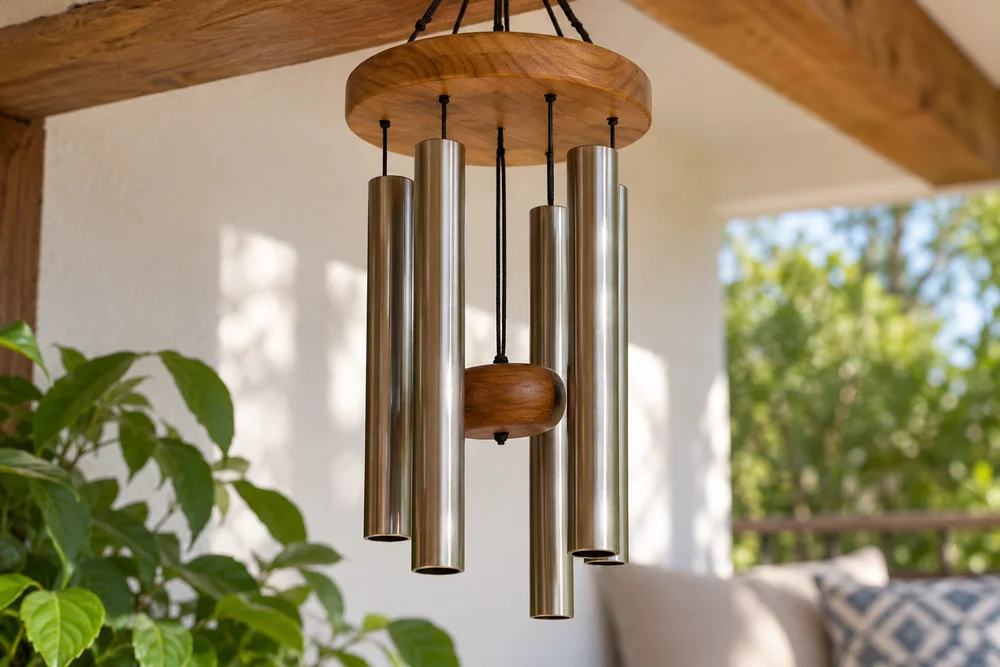
Aluminium tubes can have bronze, copper or other coloured finishes. That appearance does not turn them into those metals. Ask separately about the tubes, top support, striker, sail, hook and cord. A brass ornament on an aluminium chime should be described component by component. For a product sold as tuned, request the manufacturer's tuning information rather than inferring a musical scale from the number of tubes.
Inspect the moving parts
Look for smooth tube ends, well-supported suspension holes and a striker positioned where it can contact the tubes. The sail should move without snagging. Cords must not be cut by sharp edges, and joins should be closed securely. A detailed photograph of the top and underside is often more useful than an elaborate lifestyle photograph.
Measure the complete assembly
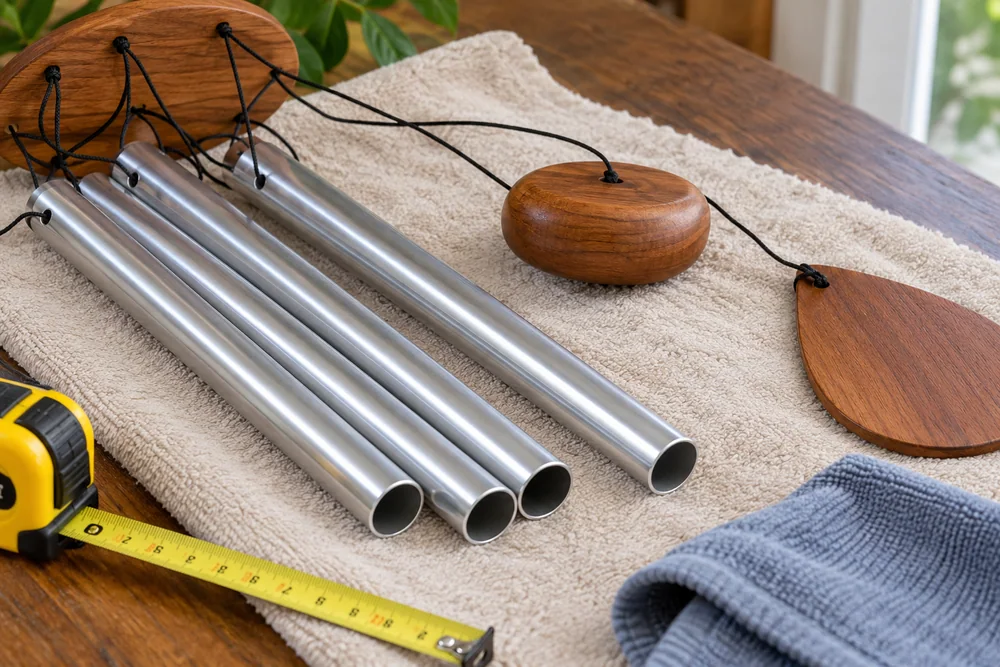
Overall length includes the hook, suspension and lowest part of the sail. Leave additional room for swinging. Check the width as well as the drop, especially beside a wall or door. A small sheltered installation is different from an exposed garden location. Obtain guidance for the weakest component: a durable metal body may still use a moisture-sensitive wooden support.
Before ordering
Confirm the included hanging hardware, replacement-cord availability and return conditions. Do not choose a heavier chime unless the fixing and support can carry it safely. Prefer a clearly specified model over an unsupported promise about a healing frequency.
Questions readers ask
Are more tubes always better?
No. The number of tubes is only one design choice; dimensions, tuning, striker and suspension also matter.
Does copper colour mean solid copper?
No. The base metal and any coating must be identified separately.
Explore the existing Vastu collection for related home and entrance ideas.
For broader traditional context, read the existing Vastu Shastra overview.
Research references
Woodstock wind chimes; Woodstock product care. Source names are provided as educational attribution.


