
At a Glance
Ask what the stone is, what has been done to it and whether it suits the intended use. Compare the actual item, its disclosed treatment and the scope of its report. These material checks support a buying decision; they do not establish horoscope suitability.
In this article
Begin with the actual item
A general gemstone name tells you little about the particular item being offered. Before paying, look at its photographs, description, dimensions and available documents together. Ask whether the images show that exact stone, how its colour was photographed and which details are stated rather than implied. A calm comparison is more useful than deciding from one impressive adjective.
This is a material buying checklist. If your starting question is astrological, first read the difference between association and personal suitability. A well-described stone can still be unrelated to your requested assessment, while a supported gemstone category does not automatically approve every item sold under its name.
Identify the material and read the report's scope
Ask for an accurate description of the material, including whether it is natural, laboratory-grown or a different material used as an imitation where applicable. These terms answer different questions and should not be blurred together. A report should be read for what it actually identifies, not as a badge that proves every statement in a sales description.
Check that the report and the offered item can be matched through their stated details. Consider dimensions, weight, photograph or other identifying information where supplied. GIA describes its coloured-stone analysis as material identification with relevant analysis, including detectable treatments within scope. Such a report is not a certificate of personal astrological effect.
Treatment disclosure belongs in the decision
Some gems are treated to change appearance, and different treatments can affect the care a stone needs. GIA's treatment resource is useful background because a casual visual inspection may not reveal what has been done. Ask the seller to explain the disclosed treatment in plain language and provide care guidance relevant to that material.
“Natural” and “untreated” are different claims. Similarly, a stone's attractive appearance does not answer the treatment question. If the recommendation method you follow has a specific treatment requirement, make that requirement explicit before comparing items. Do not assume the assessment team and the seller are using the same shorthand.
Compare size and colour in a useful way
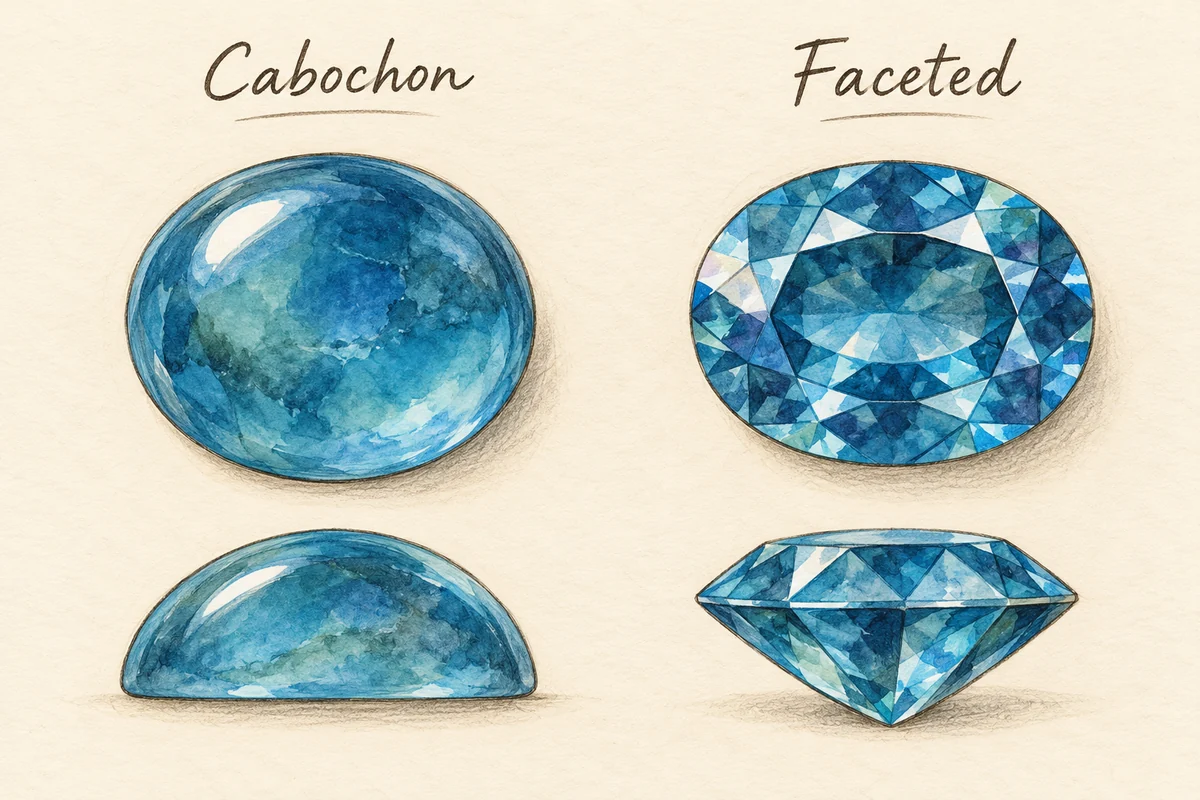
An enlarged photograph can make a small stone look much larger. Read the actual millimetre measurements as well as the weight and shape. Ask for a clear view in ordinary lighting where needed; changes in illumination can alter how the same item appears. Two photographs with different lighting are not a reliable before-and-after comparison of quality.
When comparing ruby listings or emerald listings, compare the available facts for each item rather than assuming all stones in that category are equivalent. The intended fitting also matters: a setting, metal choice or finished ring measurement can affect how an item feels and is used, independently of its gemstone name.
Finish with care, budget and time to decide
Ask whether the piece suits everyday wear and what situations should be avoided according to its material and construction. Obtain the actual seller's care and return information. Avoid trying destructive home tests on a purchased stone. An explanation that is difficult to understand is a reason to ask a question, not a reason to rush.
You can explore the gemstone collection once these checks are clear, or return to the free guidance form if the personal recommendation itself needs attention. The practical and interpretive questions can be handled in order. A clear description, an appropriate document and a comfortable decision are better foundations than pressure to choose the most expensive option.
Sources and Method Notes
These references provide cultural, practical or material context. Traditional guidance does not establish a guaranteed personal outcome.
- GIA: introduction to gem treatments (opens a new tab) — Why treatment disclosure, durability and appropriate care matter when comparing actual gemstones.
- GIA: coloured stone identification and analysis (opens a new tab) — What laboratory identification and detectable-treatment analysis can establish; these do not certify astrological suitability.
- Jewelers of America: gemstone buying guide (opens a new tab) — Practical comparison of appearance, treatments and the intended use of coloured stones.


